Showing posts with label social learning. Show all posts

Monday, January 15, 2018

Three different views on social learning

I am not the first to note that social learning is a confusion concept. Every Friday there is an interesting #ldinsight Twitter chat. I joined one Friday when the topic was about social learning. I struggled going from my tweetchat back to twitter and hootsuite trying to keep up with replies :). Any Twitterchat is hard work but it was worst to make sense here because I noticed that we all talked with a different view on social learning. For instance, people talked about groupwork and having time to read quietly. I often see social learning is seen any learning activity which involves more than one person. That's one of the views but not mine.

I will write down the three main different views I hear when people talk about social learning. I see the social constructivist, the new social learner and the collaborative learners.


Definition

Learning is situated and knowledge is constructed through interaction with others. Knowledge is not constructed indivually but is influenced by others.

Social learning combines social media tools with a shift in culture encouraging connections
Social learning is learning with and from others
Typical remark
“You can not turn off learning” “Even reading a book is social”
“I connect and learn through my online network” “just the technology is not enough”
“We should add some social elements”  “It is all about sharing knowledge and experience”
Online or offline?
Both
Online
Both
Typical interventions
Scaffolding
Communities of practice
Social network inventory – looking for existing communities

Introduce an Enterprise social network
Stimulate use of social media
Working Outloud

Groupwork
Peerreview
Adding interaction to e-learning
Result
Collective learning

Online networks
Learning from peers

Images through Robin Higgins on Pixabay

Not any of these views are wrong. Someone said this distinction is putting ideas in boxes. Personally I think surfacing your underlying ideas about social learning can be helpful in a conversation. Otherwise you might not understand each other. I am a typical social constructivist because I look at learning as meaning making. However, I often adopt the new social learning definition because it is a much clearer definition. The collaborative learning approach is not wrong, but it does not focus on collective learning which is often very important in organizations. Mmm in networks as well in fact.

Do you relate to any of the three views? Which one?

Wednesday, December 14, 2016

A new focus for my blog: the new social learning

In 2005 I started this blog around communities of practice. It was a great way to investigate, learn and share my steep learning curve about communities online. I still love to work with communities (facilitate the LOSmakers), but somehow my work has become much wider.  I have been writing about many things which interest me, though mostly about learning and learning technologies. Going back to my first blogpost I became nostalgic about the clear focus I had. I decided to think through a new focus and I found it in the term: the new social learning. It is wider than communities of practice, though communities would still fit in as one of the learning interventions. I call it the new social learning (coined by Marcia Conner and Tony Bingham) not to confuse it with the fact that all learning is in fact social. It is funny when I read the book some years ago, I didn't like the term at all.

My key interest is in how the way we learn is changing because of the internet and all social technologies and which new forms of learning evolve. When I worked in Chile, Mali and Ethiopia I was basically inventing everything by myself with a few key colleagues. I used to carry certain pages from books around. I had supervisors, but they were not all very interested and even if they were interested they were only interested in the progress, but couldn't help me with all my practitioner questions. Now I am inspired by so many practitioners from all over the world.. Through the 100 blogs I read, Twitter and LinkedIn groups.

Here's a video I made in the beginning of this year interviewing people at the learning and technologies conference. Answers include - is has become self-directed: it not about what you know but about what you can find out; where, when and through what means we learn is changing; dealing with information overload become important, we can instantly find out what we need to know, and the question of whether we will even be learning if artificial intelligence can take over?


The new social learning

My questions to explore are:
1. How does the knowmadic learner think, work and reflect? and what are the new challenges? What are the differences amongst different generations?
2. What is the impact of new social technologies? What are new technologies like learning record stores and what can you do with those technologies?
3. How does learning in (online, open) networks work? Changes as a result of technological changes?
4. What are new learning interventions? Experimental or effective?
5. What are practical examples of social learning in organizations?

In short my categories will be:
  • Knowmadic learner
  • Social technologies
  • Networked learning
  • New learning interventions
  • Practical examples
Sounds very structured isn't it? I hope this will also help you to make a decision to follow my blog or not. It will give me inspiration to look with curiosity for developments I see online or experience myself. 

Wednesday, October 05, 2016

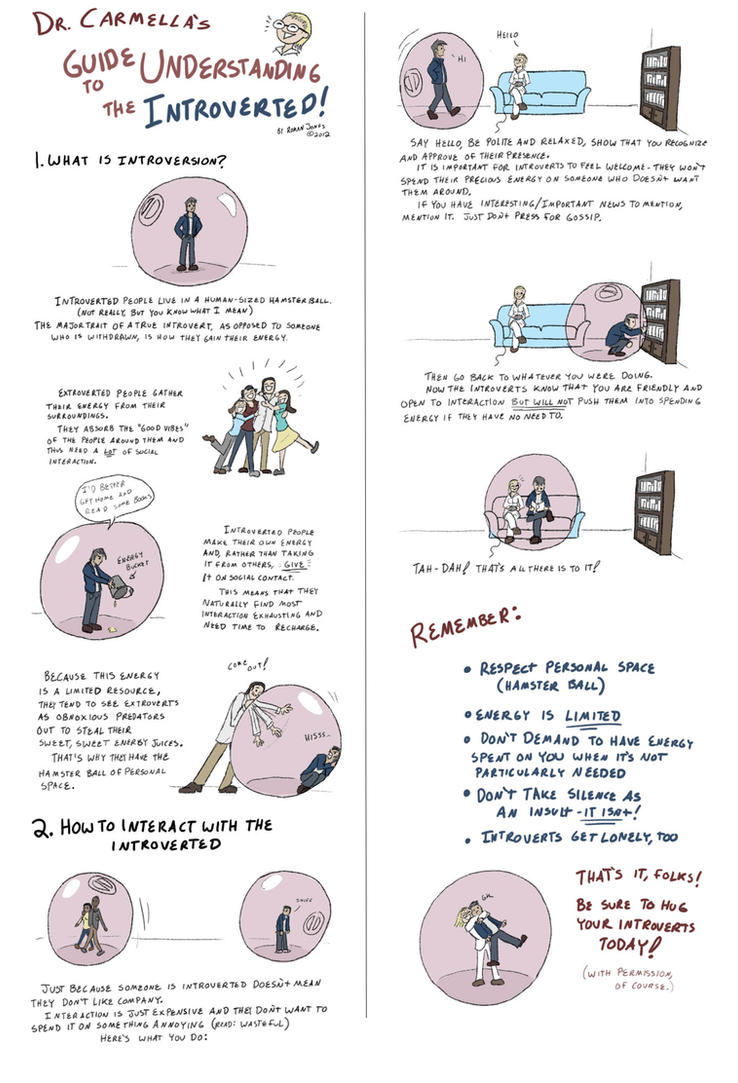
7 tips to engage introverts in social learning


Introverts love to stay indoors and have difficulties expressing themselves, while extraverts are outgoing and enjoy telling all their stories. That is the image we often have about intro/extraverts. How does this relate to social learning? Can introverts engage in social learning? It could be that introverted professionals prefer to go through individual e-learning models and more extroverted professionals in social learning activities.  Maybe extroverted learners are especially active in a community of practice and the introverts read along and 'lurk'. But is that true? 


With these questions in our minds we, Annet van der Hulst and Joitske Hulsebosch, have investigated this theme, using articles, blogposts and doing a mini-research. Our aim is to find out what the difference is between both groups and how you can use this in your design of social learning processes. Here's a pinterest board with resources. An important source is the book Quiet by Susan Cain.

The definition of introvert and extravert

A third to half of the people are introverts. From Cain's book: “Introverts are drawn to the inner world of thought and feeling, extroverts to the external life of people and activities. Introverts focus on the meaning they make of the events swirling around them; extroverts plunge into the events themselves. Introverts recharge their batteries by being alone; extroverts need to recharge when they don’t socialize enough. Think of an introvert like: reflective, bookworm, sensitive, thoughtful, modest, friendly, risk-averse, avoiding conflict. The extrovert is action-oriented, assertive, active, outward looking and feels comfortable in the spotlight. And all without generalizing :). Do you know if you are introverted or extroverted (or ambivert)?

Everybody is social

In this infographic about introverts we immediately find an important conclusion: introverts are not antisocial, they have just as much need for interaction as extroverts. In other words introverts learn socially, but may like other types of learning activities. Susan Cain draws the same conclusion: “Relationships make everyone happier, introverts included, but think quality over quantity”.

What are learning preferences of the introvert and extrovert professional?

We have already concluded that everybody engages in social learning. But let's go back a step: do introverts have different learning preferences? In Kolb's learning cycle he distinguishes four learning activities. Two of them (reflective observation and abstract conceptualization) would, according to him more fit an introvert dimension and the other two (active experimentation and concrete experience) more extrovert. That does not mean that introverts can not or will not perform the other activities, but that introverted and extroverted learners have different preferences. For social learning would mean that activities that are invoked to reflect on the skills and thinking are more attractive to the introvert learner and you can expect more activity and input.

Karin de Galan from the School for training has written in Dutch about training introverted participants. She finds it difficult that the introverted participants provide less response while they are happy with the content of the training. According to her it is easier to engage the introverts if you give time to think, build in one-on-one conversations instead of only discussions in plenary, and in work assignment go at a slower pace. Translated to (online) social learning, this means that you do not always expect an immediate response in an online debate, but offer space to formulate a response (for example, send prior to a Webinar or online meeting some questions to think about). It is also good to get together in smaller groups or to work in pairs  (in a separate room during a live webinar for example, or in a subgroup on LinkedIn or Yammer). In Quiet we read about examples which support this line of thought. Avril Thorne did an experiment with women in conversation in pairs. The surprising thing was that the introverted women talked no less than the extroverted. However, the introverted pairs talked about one or two serious issues, while the extrovert discussed much lighter and wider issues. Another observation which confirms our findings is that introverts really like collaborative learning, but have a preference for groups of 2-3 with clear roles.

Online preferences of introverts and extroverts professionals: "it's a level playing field"

How about sharing online? Online seems just right for the introverted professional, because of the delay in communication. You can think as long as you like about your answer.  Heidi Cohen: Social media engagement affords introverts the ability to engage for short, strategic interactions on their own terms. introvertspring notes that online is perfect for both groups: "It’s a level playing field online".  Susan Cain: “Studies have shown that, indeed, introverts are more likely than extroverts to express intimate facts about themselves online that their family and friends would be surprised to read, to say that they can express the “real me” online, and to spend more time in certain kinds of online discussions. They welcome the chance to communicate digitally.” However, online we have to deal with information overload and extroverts seem better at coping with information overload. The reflection of introverted professionals namely takes a lot of cognitive space. If we state our cognitive capacity as 100%, then 75% of the introvert capacity is task-oriented and they use 25% to reflect. For extraverts these figures are  90% versus 10%.

Mini-research (n=8)

We are curious what we ourselves observe with regards to preferences within social learning activities in introverts and extroverts professionals- and especially online. We held a mini- survey (N = 8) within our online course. The result is as follows:


Some tentative conclusions we can draw from this mini-research:

  • The extrovert professionals prefer activities such discussing statement in conversation, face-to-face meetings, a lot of interaction and synchronous online workshops. These are activities where the direct and synchronous social contacts are more central. Also, the more 'do-oriented' activities.
  • The introverted professionals have a preference for activities like a webinar with an expert, discover and experiment with tools and work on their own case. These too are part of social learning, but they contain almost all an asynchronous aspect or an aspect where finding out by yourself is a part. Again, we notice some 'do-oriented' activities, but the thinking and reflection activities are note-worthy. 

At first glance, the results of our little research seems so to confirm the learning activities that Kolb calls more introverted.

Seven tips for designers of social learning processes

Thus we arrive at seven tips for the designer and facilitator of social learning processes that take both groups adequately into account, so that everyone feels good and can actively participate.

Tip 1. Know yourself and your audience. How many introverted and extroverted professionals do you expect? And what are your own preferences? If you know your own taste, you can program the opposite: try to see your program through the eyes of the others.

Tip 2. Blended is a good way to serve both types of professionals. Face-to-face extroverts may take the lead and can be overwhelming for introverts. One seems perfect for the introverted type. A 'level playing field'.

Tip 3. Maintain a good balance between asynchronous and synchronous learning. Synchronous speaks to the extroverts more, asynchronous more to the introverted.

Tip 4. Vary between larger, smaller groups and plenary. Work in pairs of two can provide a secure space for introverts to express themselves.

Tip 5. Find a balance between hands-on activities and reflection. Introverts love to go in depth. Be sure to find the space for it.

Tip 6. Make sure all types of learning activities are covered: reflection, theory, active experimentation and experience, in this way you cater for all preferences.

Tip 7. Help introverts professionals to direct their attention. Extroverts can better cope with information overload. Online, overload is hard to avoid. Help introverts to deal with it by directing them to the most relevant discussions.

PS I found a research summary which supports the idea that introverts value online learning. There did appear to be some differences in Introversion vs. Extraversion, with only 5.6 percent of those preferring Extraversion and 11.4 percent of those preferring Introversion choosing virtual training over other options. 

Friday, September 30, 2016

Book instead of blogposts

My last blogpost is almost 4 months ago. I admire people like Richard Millington who blog faster than I can read.. The reason that I did not find the time to blog is that I have written a book with Sibrenne Wagenaar called 'Leren in tijden van tweets, apps en likes'. You can almost guess what it means: Learning in times of tweets, apps and likes (and yes we have driven our editor crazy with the amount of English terms in the book).

We have written for almost one and a half years. It was great fun to do, but it costs a lot of time, in addition to ordinary consultancies, our courses and private life. It was certainly a difficult book to write: more difficult than our previous book called 'En nu online'  which gave tips on how professionals, teams and organizations can use social media. Learning in times of tweets, likes and apps is more descriptive and examines the changes in society as a result of social technology and its impact on professionals, the opportunities for organizations and what this means for learning professionals. What I really liked is that we had a group of 20-25 people who wanted to think along for instance with a facebook exchange and/or reviewing the models.

Writing this book was almost like sculpting a model (which I did once). We started brainstorming and writing to reflect on the main themes. This was supplemented by interviews, reading and case studies. I guess we have rewritten each of the five sections at least eight times! In this blog I would like to share in a nutshell what the book (of 250 pages!) has brought me in terms of new insights:
  • First, I got to love the term social technology. I want to use this more frequently and consistently. We started with Ennuonline almost 10 years ago talking about 'web2.0' then 'social media'. Followed by 'new media'. The beauty of the term social technology is that the word is social has return. That is our focus and passion. We are not experts in individual e-learning modules.
  • Secondly, I like the distinction we started to make between different types of professionals: Knowmads, Googlers, Followers and Hobbyists while we started with the Knowmads as an ideal type. I have used this typology already in several sessions and it helps to see that not all professionals are the same. I think it is a good framework which I'm going to use in my future work. You can facilitate the groups in a different way. Informally we already did that, I believe, for example, by always look for the pioneers.

  • I see more clearly or understand better why often the communications professionals and IT specialists are taking the lead concerning social technology within the organization. This is a huge frustration of mine. Many learning professionals do not yet have a social lens and have no affinity with technological developments. Despite the focus on 70-20-10! I think that learning professionals in the future will have a much higher involvement with social technology in the organization. I also understand that the technology has helped to put social learning into focus. When I started in 2005 with communities of practice, few organizations were interested. There is now much more buzz around learning in communities. 
  • We distinguish different stages of how organizations embrace social technologies, for instance organizations focused on online and blended learning versus social learning. It is still a question of where we want to focus our advisory practice. On both? Or should we specialize? At least this justifies reviewing the websites and our learning trajectories. 
  • Social Network Analysis is one of my passions, but I always felt it is an odd one out in my advisory practice. In the book I tried to find a place for it and found it. Doing SNA is a super important step in social learning. I'm looking for a situation where I may apply this in full. 
  • The chapter about the future made me dive into developments like artificial intelligence, machine learning, experience API. Areas that I'm not an expert in and more importantly I don't have experience with. My conviction is that I like to talk and giving advice on things I have experienced, I'm not sure what to do with this. Or is it the doctor's case who doesn't need to have undergone malaria in order to treat it? 
Enough lessons to justify writing 1.5 years? One way you can help is responding whether you think we should translate this book in English or not and what may be creative ideas of translating it, for instance by crowdfunding or crowdsourcing.

Wednesday, June 01, 2016

My social learning experiences

For a long time I organizing a blog carnival was on my bucket list and I finally took the plunge. I choose the topic: my example of social learning. Why this topic? I notice that there is a lot of confusion about social learning: is social learning about learning through social media? is social learning any process in which more than two people are involved? By inviting people to blog about examples you can start a conversation what social learning is (and what not). And maybe it means different things to different people!

I am currently reading the book: How we learn by Knud Illeris - He describes three dimensions of learning:

  • content
  • motivation (motivation)
  • the interaction (the external environment)
These three dimensions are always part of a learning process, and thus is in fact learning is always social there is no "non-social" learning. That of course makes it even more difficult and confusing. It is true, however, that the social learning movement pays more attention to the social aspects of learning than others, for instance e-learning designers. Enough theory - now my own examples. I would like to compare two of my own examples. An example of the social media era and a pre social media experience, so the difference is clearly visible.

Social learning with advisors in West Africa

A good example of what is still an inspiration to me and was a transformative experience is the community of practice of SNV's consultants in West Africa from 2000 to 2003. I worked in Sekondi-Takoradi in Ghana in an advisory team. Advisory work and working in autonomous teams was new because SNV used to carried out development projects before 2000, so this was a major shift. I had a role in coaching the team in the new way of working as consultants. About 15 people were part of the community of practice of advisors in West Africa. These were consultants who were engaged in the new consulting practice of SNV in other countries such as Benin, Mali and Cameroon. Albania was also part of it because they had no partners in Eastern - Europe. Through the exchange in the community, I began to see broader contexts, we found common threads in our experiences. I was encouraged to make a case analysis of my own team, something which led to many new insights for myself and hopefully also others. Also, we were asked for advice on strategy development. It had great impact on me because I learned a lot, felt heard for the first time in my career. I also think it brought a lot of innovations to the organization. The way we interacted was twice a year 2-3 days together. There was not much technology support, although we experimented with an email exchange in which we got a new question every hour only by mail, and a Yahoo Messenger chat. Interestingly, I still have four friends from that community whom I'm still seeing regularly.

Social learning about social learning

If we compare this experience to the way I learn currently about social learning, I notice I am currently inspired around social learning by all kinds of people but there is a less obvious group, a less obvious community with boundaries. My base is in Ennuonline where I work together with Sibrenne Wagenaar and a group around it. In addition, I was influenced enormously by a clearly defined group of people within CPsquare (CPsquare no longer exists), some of whom I also still interact with online. This is where I got my interest in social tools and first learned about LinkedIn and Flickr in 2005. This group stimulated me to start this blog too.

But actually my thinking and practice is now influenced by a huge fluid group of people whom I follow through blogs, Twitter, LinkedIn and Facebook groups and MOOCs.  An example: I frequently use some of the models shared by Jane Hart in my work with clients. Important people which I always read blogs include Jane Hart, Beth Kanter, Harold Jarche, Ger Driesen and Wilfred Rubens. In addition, I add new people regularly to my radar through Twitter or feedly. Occasionally I collaboration more intensively, such as in organizing a teamhackathon or the thinktank around our book. The most powerful ways to connect are surely cooperation or engaging in conversations at a networking lunch, conference or meetup.

Social learning pre and post social media

If you compare these two examples, it is actually true that the interaction, the external environment has changed a lot. The number of people which influence me has become much larger. However, the investment, the commitment in the community in West Africa was much larger. The advantage of having a large fluid network is that you see a lot of diversity, but the pitfall is that you get less depth because it's faster and more volatile .. You probably need a bit of both. How do you organize this for yourself?

Monday, April 25, 2016

Social learning circle- new ways of learning at a conference

Last Tuesday I've facilitated a so-called learning circle about social learning at the Next Learning conference in Den Bosch. I really like the idea behind a learning circle - a circle is composed of a group of people interested in the same topic but who do not know each other meet. They meet and  exchange before and after the sessions, guided by a coach (me). I think this really helps for 'sense-making' and networking. Many of my circle people were people who did not know many others at the conference. This helps to meet people with similar interest and you get more out of a conference. I think the initiative super. You often hear at conferences that we are "not really applying our own learning principles". However, there are few initiatives like the learning circles.

How did it work out? Well... It was a fine example of a social process - quite unpredictable! I wanted to connect online (via a Linkedin group) but it was not a smooth and rapid process. Some didn't receive the invitation, others were unhappy that I had their email address. Not everybody introduced themselves. However it gave me some insight into the group, and their questions. A number of people who have applied for the circle never showed up, not even at the conference site. Some others were quite excited and there was a small core group of people who stayed afterwards for drinks. There were spontaneous initiatives for a whatsapp group and discussion afterwards.

We have put together a video around the topic of social learning - the instruction was to interview somebody about social learning for a one minute clip with your mobile phone. Four of us participated. Nice to see how every clip highlights a different aspect of social learning. Worthwhile to  repeat. It would help to have a little more time to agree this together, we had barely 20 minutes before the key note started and we had to do intros as well since few introduced themselves online.


If you don't speak Dutch here are some highlights from the interviews. Petra Peeters defines social learning as "making use of people's expertise and their sparring capacities". Marcel the Leeuwe concludes social learning is in the interaction and you can stretch people in the way they interact with others. Playing with media like video can sometimes help to dare to ask questions which they normally would not dare to ask. Kirste den Hollander is the mother of the 'biechtbox " a confessional boxa box to talk about your mistakes. She thinks that learning from mistakes is indeed a social process, you should talk about your mistakes so that others will avoid making the same mistake. In other to learn collectively from mistakes it is important that you are open to discussion and that people can listen without judgment freely.

Finally there is the input of Anja, a PhD student of Filip Dochy. Filip Dochy presented the High Impact Learning (HILL model). Anja is enthusiastic about the model and examines culture and learning environment. We should not speak about THE learning culture of an organization, this varies considerably from department to department. So social learning may look different in different departments of one same organization. A good reminder!

hill model

Monday, September 21, 2015

Social media in organizations: the case of the ambulance services in the Netherlands

Ambulance

With great pleasure, I conducted a field research together with Sibrenne Wagenaar with one of the the ambulance services in the Netherlands. The ambulance service asked us to look for improvement in internal communication; driven by the fact that technological developments offer new opportunities for collaboration and communication within the organization. The initial question was: how can we improve communication within the organization using new media?

We went in search of new forms of internal communication that fit the organization. We did an action research which lasted five months and was conducted by a pioneer group of 17 people, accompanied by us. The action research consisted of internal reflections, research within the organization, visiting other organizations and an experimental phase. Experiences are interesting from the standpoint of how technology influences collaboration within an organization and are likely to be recognizable to other organizations.

Some conclusions
What was especially noticeable is that even if you do not use social media, these media still have an influence on the organization. In this case there was a static intranet, with information from management. At the same time, there were a large amount of Whatapp groups within the organization, often invisible to management. Communication in these groups was often not favorable to the organization in the sense that confusion messages were amplified. If management in an organization does not have an eye for this type of communication via new media, it may strengthen a culture that you do not favour. The outcome was that the organization may benefit from a social intranet, however, a lot of attention should be devoted to stimulate a new way of communication, both face-to-face and online. An experiment showed that people did not like to participate in open groups online, but really need the safety of a small closed group. A social intranet is a big step for this organization and will need a clear vision and several years of implementation.

Download the full article
We wrote an article about our experiences for TVOO in the Netherlands. You may download the article sociale media bij de ambulancedienst  which is in Dutch.

Thursday, September 17, 2015

From intuition to knowing for sure: a case of applying learning analytics at course level

Blogpost is written in collaboration with Francois Walgering from MOOCfactory and Sibrenne Wagenaar from Ennuonline.

More and more trainers and facilitators use online platforms for online interaction to facilitate learning. This is akin to face-to-face facilitation but also has its own dynamics. For example, how do you know if an online article is read? Or how much time a participant spends viewing a video or doing an assignment? Which participants connect online? How to judge whether valuable conversations place? In a face-to-face setting you can ask process questions to participants: "do you need more time for this discussion?" And "an extra assignment about ... seems to make sense." You can observing interactions and sense the group's enthousiasme. You may adjust the learning process gradually as a result.

In an online environment you miss these kind of observations. Online, some data can be helpful. Data collected by the system, such as degree of online activity, time spent viewing source, reached level, length of discussions. The value of these data is in analyzing and interpreting: what we call learning analytics. We recently experienced the power of learning analytics and gladly share this experience with you.

The case: the food and nutrition security course
Schermafbeelding 2015-09-17 om 13.28.54

We have designed and facilitated a five-week online course (a so-called SPOC- Small Private Online Course) "Food and Nutrition Security". About 90 people took part, and we have worked with them in Curatr, a learning platform that supports social learning. Four of the five weeks had a specific theme in the fifth week was reserved to work on practical cases, brought forward by participants and experts. The participants received a certificate after earning a minimum number of points per week and writing a case reflection. 19 people have received the certificate.

Online monitoring- using your intuition
During the course, uur most important source of information were feedback from participants on the online platform and e-mail messages, about content as well as the process. We had a picture of important issues, issues that led to discussion and effective learning activities. For instance, we received many compliments on the weekly interactive webinars. Another example: after an upgrade of the software technical problems arose which discouraged participants. And a number of participants informed us that they appreciated the content very much, but got in trouble with new ad hoc task at work. By following discussions and explicit interaction with a number of participants, we have developed a feel for the quality of the learning process. A group of enthusiastic participants began to emerge as a core group. Intuitively we felt that we were on the right track with this online learning program. But ... what can the data can tell us?

Online monitoring- analytics
Curatr collects behind the scenes lots of data using Experience API (xAPI). Beyond the general data such as name, surname, e-mail, organization and function you also get very good insight into the 'User'- and' Usage 'data. What is the difference between user and usage data?
progress analytics
User data is: all qualitative data you collect within the platform:

  • All threads are started by participants;
  • All reactions started in several discussions;
  • All sources (videos, PDFs, blogs, websites) which were added by participants;
  • Any responses to learning activities offered (eg reflection questions, quiz, open questions)

Usage data are the quantitative data (see illustration)

  • How many comments have been posted by participants;
  • How many resources have been added by a participant;
  • How many comments by those who have liked;
  • Who what when level has been reached;
  • Number of participants who completed the SPOC.

Learning Analytics involves looking at the data, analyzing it and acting on the results. We can perform learning analytics at different levels . The depth of analysis affects the reliability of the actions we arrive at. You could say that learning analytics roughly consists of five steps:

  1. Visualize: You are viewing the data, for instance, 100 participants who completed the SPOC, 20 participants in the test with a level one completed. This qualitative data is generally speaking easy to generate from a learning platform.
  2. Clustering: The data that you see, can be clustered: all activities of a participant, all threads which have been started, all the sources added. Together they form perhaps a cluster 'involvement' or 'quality'.
  3. Relationships: For instance "after a mail by the facilitator the activity on the learning platform has gone up." Or "the most important activity on the learning platform is to discuss with each other. "
  4. Patterns: activities that have repeatedly proven themselves. We see for example, by looking at different SPOCs that 80% of participants watching a video stop after three minutes. 
  5. Actions for the future: Based upon the pattern 'participants stop a video after 3 minutes' we may decide to use only videos within that period, or ensuring that the core of the message is transmitted within the first three minutes of the video.

Learning analytics in the case of the Food and Nutrition Security SPOC
Mooc score plaatje 1
In the case of the Food and Nutrition Security course we have taken a number of peaks at the data like people logged in and the leadershipboard during the course. Afterwards, we dived deeper into the data, with extensive analysis and interpretation. This proved really valuable and has given us new insights regarding the manner of participation of participants and the motion when it comes to social learning. A few examples:
  • Most of the participants who have ended high in the leadership board, earned points by contributing to the discussions. This group was also very visible to us and we had them 'spotted'. However, there appeared to be two participants who earned quite a few points, purely by studying sources. They had not responded online and had therefore remained invisible to us. While they actively participated in the course.
  • We were also curious to know about sources and questions that entice good discussions. 'Good' a qualitative concept and difficult to measure. But some threads stood out because of the large number of responses from participants. We have analyzed those discussions discovered that the striking aspect here was the contribution of an expert / coach: the fact that the expert herself was involved in the discussion by asking questions, giving an opinion, made the discussion very lively.
  • A diverse group took part in this course, and we were wondering if we would see differences in participation between certain "groups" (eg working in the Netherlands versus working in Asia, or working for NGOs versus working for government). This certainly was the case. Some "groups" had a much more explicit contribution to the social learning than other groups. Important to know when designing new courses! In the illustration, you can see the visualized total scores of the different groups.
Some of our lessons about using learning analytics as online facilitator
  • Using learning analytics can be very supportive of your role as an online facilitator. You can find confirmation for possible interventions. In the beginning as an online facilitator you may be scared or disappointed by the fact that not all participants are active online. Why is that? Is it unclarity, disinterest? If data show that they participants have accessed the available resources but have not commented on the platform can may react different and try to stimulate reactions. You might invite those who did not respond specifically to do so.
  • It is valuable to combine data from the 'system' with own feelings and observations, such as reactions of participants by mail. Thus observations and analytics can reinforce each other.
  • Before you start with the learning process make an inventory of your questions and possible indicators and numbers. What would you like to see? Are you happy with 10 active participants? What sources are you doubtful about? If you do this before the start, you will know better what information will help you to gain insights during the course. 
  • Make a plan for how often want to use and analyze data during the course. In 'Food and Nutrition Security' case we analyzed more deeply after the course. Of course we held an eye on the obvious data during the project (who log in and who contributed) but we could have put the data to better use. An exmple: afterwards we compared the activity in the various user groups. We could have done this even earlier and spend more energy to involve some groups. 
  • The learning analytics as described took place at course level. You can also go one step further and compare the data from the corresponding course with data from other courses. The results from such analysis can contribute to conclusions that fuel future designs.
  • Take time for accessing the data. Plan it in! Learning analytics is still a relatively new activity for many online facilitators. And certainly if you want to monitor during the course by means of data, it requires a regular look at the dashboard, analysis and opinion to determine your future interventions.
  • And ... start conversations with people involved to interpret the data! Check the data with curiosity and discuss it with those involved. Feeling and intuition are crucial. However, sometimes data offer new perspectives but often just confirms a certain intuition. This may then be a catalyst in order to take action. In our case we had weekly progress discussions, which might have benefitted from some data interpretation. 
Last but not least ... be careful about how you use your data. Be transparent about your intention with it. Tell participants very clearly what you will do with the data. After all, you are working with data on the performance of individuals in a learning environment.

Monday, July 13, 2015

Forbidden to learn (socially)

verboden te leren

On the train I overheard a conversation between two youngsters. One said he was an intern at a school. The internship went quite well but he was surprised that during the break time the teachers weren't paying any attention to the trainees. In the staff room the teachers were talking and exchange busily amongst themselves without inviting the trainees into their conversations.

At a meeting I got into a conversation with someone who was involved in facilitating online exchange through a knowledge platform. I enthusiastically told that they should go and meet with another organization, engaged in a similar process. She told me that she could not talk with that company at all because it is a competitor of her company .... Forbidden!

In both cases, it is as if you prohibit people to learn. In social learning, it is important that you can look into the kitchen, you chat and learn in conversation with other professionals. If you look at these two situations from a 'social learning' angle you miss significant opportunities to learn. The school's perception is most likely that trainees learn from practice, but I think they may learn a lot more by listening in from the way other teachers talk about their classes and students. In the case where employees are not allowed to talk to the competitor, they are afraid companyideas (secret?) flowing to the competition, but in this case you can just learn together how you shape knowledge and you may both go faster.

I was very surprised these kind of situations still exists. Do you know of more situations in which it is actually forbidden to learn?

Thursday, February 26, 2015

Let's improve our learning language as learning professionals

If the Sami eskimos have 180 words for snow - how come we as learning professionals have only one word for learning? OK, we have learning and development (L&D) so we have two words. I think we are way too sloppy in talking about learning. Improving our language- being more precise- would help advance the practice. I understand why the Dutch have only one word for snow, because we had only one day of snow this year (see picture) and rather thinnish..  but why do we keep on talking about learning without being precise what we are talking about?

Why this idea about sloppy language? I am currently in the Exploring Social Learning MOOC by Curatr and it is great. It is the first MOOC which keeps me engaged because of the content and the people (and the leadership board?). There are many interesting articles and videos to explore, including the twitter chats. The MOOC really makes me think more deeply about what I understand by social learning and how I translate it into practice. For instance it made me think about the importance of individual thinking and individual experience in social learning. I observe how sloppy we use the term 'learning'. It is not to blame the organizers, I am also guilty myself. I feel somehow that over de last years my use of words has grown sloppier because of my personal online network. Just like my English has deteriorated when I lived in Ghana because you start to speak Ghanaian English (which has its charms ofcourse :).

The objection by learning professionals may be that there are almost 180 forms of learning - informal learning, social learning, workplace learning, formal learning, non-formal learning, e-learning, multimedia learning, online learning, bench learning, mobile learning, collective learning, invisible learning, networked learning, a live long learning. brain learning, whole brain learning etc. However, this is often about the form of supporting learning processes, and not about the learning process itself. We say e-learning but basically we talk about e-teaching.

Some observations about sloppy language (not from the MOOC but also in general) and please react if I'm wrong!

Learning processes and learning interventions
Is all learning social? This was for instance a question we dealt with. This question confused me, because it may be about the learning process, as well as the intervention. The difference is that a learning process takes place in a learner's head or within a group and a learning interventions is undertaken by learning professionals to stimulate learning processes. It is almost like intervention is a dirty word like teaching or lecturing. Interventions can be assignments, but also facilitation of workshops and communities. Even doing a social network analysis and identifying thought leaders is an intervention. Often people talk about learning and it is unclear to me what we mean. When we talk about formal learning - I think we don't talk about learning but more about the formal learning interventions.

Social learning = not learning with social media
People often equate 'Social learning with Learning using Social media' which is a very narrow definition. Social learning's definition from wikipedia is learning that takes place at a wider scale than individual or group learning, up to a societal scale, through social interaction between peers. It may or may not lead to a change in attitudes and behaviour. Well we can debate about the exact definition but it can definitely take place face-to-face too. You get weird conversations if two people exchange about social learning from two different angles.

Social learning is not the same as a group process and interactive methods
I notice many people also use the term social learning when they talk about group processes and interaction. If we simplify social learning to interaction within a group - it is better to use the word group learning. Social learning is a theory about how people are influenced by social norms and learn how to act from their social-ecological systems. At times I also use social learning without explaining what my definition is because it is not easy to explain. An understanding of social learning will lead to different interventions with more attention to for instance, building social capital.

Single, double and triple loop learning
Is it old-fashioned to use single, double and triple loop learning? The terms are first coined by Argyris and Schon. Here's a nice explanation in one page. Single loop is learning within the current frame of work for instance, how to use a new software program. Double loop is about changing the way you think, your frame of mind. Triple loop is about learning to learn. We had a nice discussion about critical thinking, but when we talk about single loop learning - critical thinking may not be necessary at all. The paper states "key breakthroughs in helping people understand the dynamics of learning are the concepts of single loop, double-loop and triple-loop learning." I agree but somehow we moved to 70-20-10? Is single, double and triple loop not practical enough?

E-learning 
I often hear - "I want to buy an e-learning". Somehow we should forget the term e-learning (I try to avoid it at least) because it has become synonymous with page turner modules and courses for individual use. I see e-learning as any process supported by technology but don't think I will every be able to change the definition.

70-20-10 versus directed/self-directed learning 
The usefulness of 70-20-10 model is that it brings attention to the 70% informal learning processes, learning on the job. However, people are talking sometimes about 'moving from the 10 to the 70'. It has become the norm to support the 70. And even if directed, instructional learning is moved online it is seen as part of the 70 whereas in my opinion it will still be part of the 10 because it is still a formal learning intervention. The discussion in my opinion should be more about self-directed learning processes within the organization versus directed learning interventions and compliance training. There is a nice blogpost about the importance of formal learning interventions by Ben Betts which you can read here. Especially the last part is important where he argues that putting efforts in formal learning interventions may speed up the informal learning processes lateron.

More sloppiness?

Tuesday, June 05, 2012

Why we enjoy sharing thoughts and emotions online


In this cartoon you see how people in the '50 would have reacted to the idea of sharing on Facebook en Twitter.. "so you are saying people will tweet what they are having for breakfast?!" I meet many people who are as surprised today (including myself at times! I'm not sharing so much personal information for instance.. ). 80% of the messages on social networks like Twitter are about our experiences, of course a twitter statement is still a reaction to the question: What are you doing?  (source article Tamir en Mitchell).

Last week I did a workshop at the Dutch conference about education and social media where Michel Penterman emphasized that social media are a logical consequence in the evolution of the need to share information. This all started with the first drawings in the caves. Maslow's pyramid about our needs is famous. On the  buying happiness weblog (via Alex den Haan) I found this picture matching social media to our basic needs according to Maslow. I wonder if there is not a new top on the pyramid necessary where we fullfil the need to express our experiences and emotion online..       
This article: 'disclosing information about the self is intrinsically rewarding' by Tamir and Mitchell is providing a great insight in why we are sharing so much via social media. The authors investigated what sharing of experiences and emotions does within our brain.  People ('our species' as the article calls us) appear to have an intrinsic motivation to share their thoughts and emotions with others. This triggers a positive reward in our brains  (dopamine).

They discoverd the following (read it if you want to understand the details of the study):
  • If we disclose information about ourselves this triggers a greater reward than considering information about other people.
  • People were prepared to forego a monetary reward for sharing information about themselves. More than information about general questions - this means that sharing information about yourself has a value.
  • Talking about thoughts and emotions stimulates the reward system in your brains, even when it is done privately. However, when there is the opportunity to share it with others the reward is even higher. so sharing with people has a higher reward than sharing privately (eg. in a diary). This would explain neatly why I blog and don't do this in a private word document for instance..
Sharing what your thoughts are or sharing your emotions hence gives us a good feeling, similarly to what sex and food do for us. This is evolutionary smart because it can stimulate social bonds, enhance self-knowledge by means of feedback and to know what others think and feel, so that the knowledge of one person is greater than his/her own experiences. Smarter survival.

Leaves me with the question whether the value of a learning trajectory is higher for the people who share more? Or they will simply feel better? And lurker may learn but may not feel as engaged (hence not rewarded by their brains??

Monday, November 28, 2011

Webinar on serendipitous learning with Jane Hart

Last week we discussed the term 'serendipity' in our learning trajectory on social media. One participant thought this might be a country in Africa :). Serendipity doesn't seem to be a very commonly known term for learning professionals, at least not in the Netherlands. Nevertheless, it is something that deserve more attention in my opinion. Therefore we are organising on December 15th from 20-00-21.30 hours Amsterdam time a webinar with Jane Hart, international expert in social learning and writer of the 'social learning handbook'.

What is serendipitous learning and how might it this type of learning be stimulated through the use of social media? Definition from wikipedia: Serendipity is finding something unexpected and useful while searching for something else. The word was introduced in English by Horace Walpole in the 18th century, in a letter talking about a story he read: the three princes of Serendip. In that context serendipity is associated with the capability to draw conclusions from apparent coincidences. In other words: smart, prepared people are better capable of making discoveries based on coincidental circumstances.  The discovery of both penicilline and the post-it notes are known examples of discoveries by serendipity.   
Post-its are an example of serendipity (accidental discoveries): the glue from the post-its was already discovered by researcher Dr. Spence Silver, small sticky bullets. Because there is only a small proportion of the bullets in contact with the surface, this provides a layer which sticks but is easy to remove too. The intention of Dr. Silver, however, was to make a very strong glue. Hence the practical application of this glue was not immediately apparent.  The real invention was by Art Fry. The story goes that Fry was frustrated about the bookmarks that kept falling from his book. In a moment of Eureka he thought of using Silver's glue to make a solid bookmark which is easy to remove.  Source: http://nl.wikipedia.org/wiki/Post-it
A good illustration of the fact that serendipity is not about finding weird and unexpected information but is about making the connections, finding applications without the context of your own work. Social media is excellent for stimulating serendipity, not only at the level of new inventions, but also at the leven of finding creative solutions for problems in your own work.  Jane Hart has written extensively about these possibilities and calls these workers using social media:  'the smart worker'. Click on the following links if you want to know more:

In addition to working smarter I would also like to emphasize the creativity aspect. Social media offers many new connections, but the art is making the connection to your own situation and coming up with new solutions to old problems. For instance, you can stimulate serendipity by looking across various disciplines. Social media can play a large role is this. Here's an example of spaziale, space where Naomi den Besten is blogging about the connections between process and spatial design . Below you find an interesting TedTalk from Joris Luyendijk (thanks Josien!) talking about  'share your learning curve'. Share your learning proces (for instance via a blog), start from zero and be curious. By sharing it, you create new avenues for unexpected connections.


Would you like to work with the concepts of the smart worker or serendipitous learning in your organisation? Then you should definitely read Jane Hart's blogpost: 10 steps for working smarter with social media, helping you with steps to take in an organisation.
 
Are you interested in joining the webinar? Please find more information here.

Wednesday, November 02, 2011

About serial mastery and social media

One of my interest areas is the professionalisation process of professionals. How do you become a master, an expert, a thought leader? What are the best ways to learn individually and collectively?

Shift- the future of work is already here

An inspiring book in that context is 'The shift by Linda Gratton'- a must read book if you are interested in the future of work. She is a professor at the London Business School and describes in her book what work and the jobs of the future will look like. The reason for her research and book was the quest of her sons to find a study areas, one wants to be a journalist and the other wants to study medicine. Is that smart? Will that earn that a living in the future? But it is not only an interesting read with the future of your children in mind, but also for yourself.

The new poor

Gratton's story is not sheer positive. She describes a process of globalization in which the 'new poor' and 'talented' can live anywhere. Your birth in the Netherlands, Europe or the US will no longer be a guarantee for a good job, we must increasingly compete with other professionals from around the world (not without reason that the tigers moms in China described by Amy Chua get so much attention). And ofcourse that's already happening. Hence a focus on self-promotion and branding rather than modesty will be normal for professionals. This too is a shift that you can already see happening. If you are self-employed like me, you can still function without a blog using your old networks and offline networking skills. However, increasingly you have an advantage if you know how to brand yourself online and to find your professional voice.

From shallow generalists to serial mastery

The book also talking about the shift from shallow generalist to serial master. A serial master has a deep knowledge and competencies in several domains. So you have to specialize, and you will need and discover a new domain of relevance every few years or so. Interestingly enough, that's like reading about myself, when I started as an irrigation engineer, morphed into an organisational advisor and I'm currently a specialist in the design and facilitation of learning processes. I typically had three-year contracts. This forces you to become a sort of serial master, because after two years if you have to start thinking what you would like to do next.

The new self-directed learning = Learning

I was asked to facilitate two workshops about the 'new learning' for career counselors. Below you can find the presentation in Dutch (in a prezi).