Friday, May 11, 2012

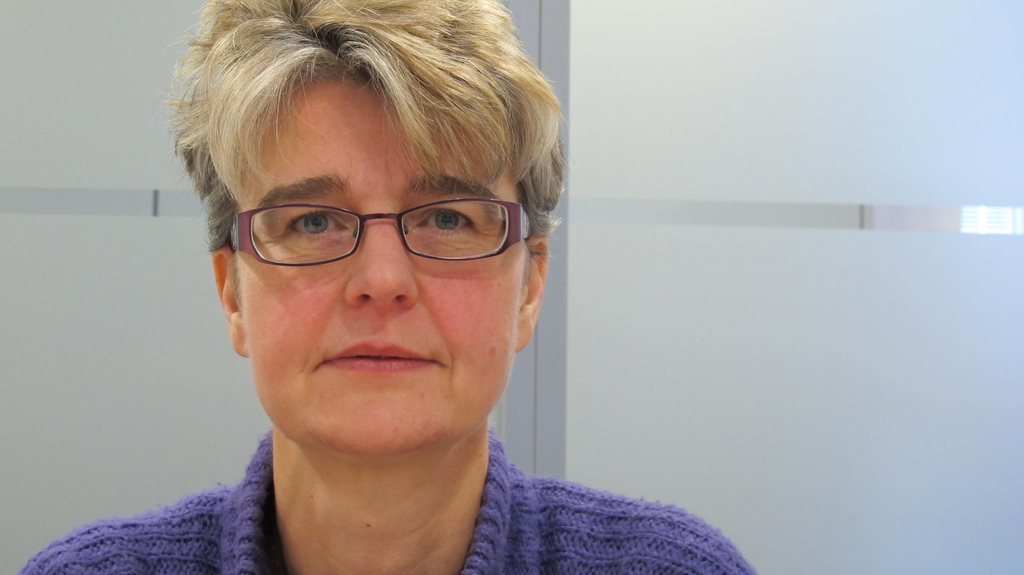
Interview with a teacher making smart use of social media

What always strikes me in contact with teachers is that there is so much difference in their attitude towards social media. One teacher loves social media and widely experiments with various media, another says "it's not for me" and doesn't want to try anything. Younger teachers sometimes have an attitude that they know it because they are on Facebook, but I don't believe they really know how to use it at all levels. Perhaps they do not see the link with learning. I believe that social media is of interest to all professionals and teachers are an important group of professionals, since dealing with education. In the newspaper special last Saturday I read the following quote: "a good teacher must continuously innovate and surprise." Here come's social media full of surprises!. Antoine is such an enthusiastic teacher convinced of the value of social media to a teacher-professional. I interviewed him, below the interview.


Tell us something about yourself as teacher at Varendonck secondary school? 
  
I work since 2003 as a French teacher at the College Varendonck in Asten. Furthermore, I support colleagues in using our Virtual Learning Environment. This school year we switched from N @ tschool to the ELO of Magister.

You blog about French and ICT (hier), tell us something about your blog, how you started it, who your readers are and what the value is of blogging for you? Do you read many blogs yourself?   
I began my blog in december 2007. My big inspirations are two Dutch professionals: William Karssenberg (@ trendmatcher) and Pierre Gorissen (@ PeterMcAllister). I followed their blogs for a while and it seemed useful and fun to keep a blog. My weblog is read by French teachers and by teachers who are interested in using ICT in the classroom. What has been the benefit for me so far? First, it is an archive upon which I can draw. Often I know that I've blogged about a particular topic and this way I can quickly and easily find the materials. I refer colleagues to some posts on my blog. Furthermore, the interaction with readers helped me with solving some problems. There are always colleagues who want to help you further. Also nice to mention is that I have been approached by Teleac to make a guide (GoAnimate) following screencasts that they have found on my weblog. I follow many blogs themselves and try to make use of Google Reader.

Which social media do you often use yourself?    
I will mention four important social media. To stay up-to-date with information I use Google Reader. With Google Reader you can subscribe to interesting blog without having to visit that blog. Furthermore, I often use Diigo, a social bookmarking site. Previously, I used Delicious, but at one point there were rumors that this service would quit and when I switched. The beauty of social bookmarking is that you have quick access to a website, because you can add tags and notes. You can also see what other teachers bookmark these links and you copy interesting links from other teachers. A third tool that I would mention is Twitter. I use Twitter to share things I find interesting with others. I also use Twitter to ask questions using the hashtag #daretoask. What always strikes me is that so many people are willing to help others. Sometimes there a whole conversation develops which is also very beautiful to observe. Finally I would like to mention Wunder List, an app allowing you to make to-do lists which you can use on multiple devices

How do you stay up-to-date?
I use Google Reader and Twitter, the two most important tools. Dat zijn voor mij de twee meest belangrijke tools.  

How much time does it cost you to read your Google Reader, blog and twitter? Do you have time to do it during school hours?   
At school I do not twitter nor blog. I do that outside of school. It depends also on how busy it is. Sometimes I don't post for a long time on my blog, because I'm just too busy. I had good intention to blog more this year, but I haven't been living up to these intentions yet. During the holidays, I try also to occupy myself with other things, like reading.

What is for you the added value of social media as teacher-professional? 
A blog allows you to think about some things and share your knowledge with others. Why should anyone have to reinvent the wheel? Social bookmarking allows you to quickly locate information and to find new interesting sites to explore. Twitter offers notably the ability to share knowledge and to ask questions.

And during class? 
In class some tools can be useful tools, such as Socrative. With this site, students can vote. I recently used this tool for practicing reading skills. In this way, students (also quieter students) become actively involved in the lesson. Make the use of social media and use equipment the students have. Some have a mobile with internet, others an iPod Touch. Not all students have access to this equipment, but if students work in pairs together, you do not need much equipment. Be creative! Further, Twitter may be used by pupils making a thesis or presentation. They can use the #daretoask (#durftevragen in Dutch) to ask questions and input. I don't use social media in each lesson. Do it only if it is useful and if it adds something.

Monday, April 16, 2012

Social media and reflection: marriage or divorce?

Social media in organisations has been a difficult topic and sometimes bothers me. When I am invited to do introductory sessions in organisations, I feel like I'm converting people to use MORE social media, whereas I don't believe it is a matter of using as many social media as possible. I do believe however in finding an optimal use of social media to support individual and collective learning and innovation. Reflection is needed in order to learn from the past. Most of the time a smarter use of media may help. A lot of times, social media don't solve the underlying learning disabilities. Hence work on social media AND the practices is needed.

Social media stimulate us to live and work in an ever increasing pace. Quick messages. Scanning. Multitasking. I had a skype this morning and we were both reading and answering our mails simultaneously. Hence it seems like social media is having opposite effect in organisation - that social media hinder reflection and deeper conversation. On the other hand, I am convinced social media can aid reflection for individiuals, teams and eventually organisations. However, what is needed are some conscious practices. Without those practices the effect of social media may indeed be the opposite: people get overwhelmed with messages and experience loss of control.

Here's a Tedtalk by Sherry Turkle called connected but alone. She basically points to the same danger of social media, though she does not talk about reflective practice in organisations, but in society at large.  She talks about "The goldilocks effect" - you get contact with others but in small bits through sms, tweets and other short messages. She claims human relationships are cleaned up by technology because connecting in sips doesn't lead to real conversations. And a flight from conversation can limit our capacity to reflect. "We can learn from solitude and listening to each other. It is in the stumbling in words that we reveal ourselves to each other." I partly agree with her that there is this danger of communicating faster, with less attention, communicating with more people but not getting to a certain depth of understanding. I also disagree because most people use social media to stay in touch with the same people over a long period of time and hence get flow of bits which also make up for revealing ourselves. For instance, there are people I get to know better through reading their blogs systematically over time. I agree for people who can't make sense of it all and do see people struggling with this. 


Let first go to the basics: what is reflection and why is it important? 
Reflection on one's own practice is an important aspect of learning. Reflection in a way to look back at what we know and what we experienced. Someone once explained it to a group by turning around and really looking backwards (with his hand above his eyes to look afar). In the process of reflection we analyse what happened to generate new knowledge and insights (this might be done individually or in group, a method for systematic reflection in group is After Action Review). A definition from a paper "Reflection is a form of mental processing that we use to fulfill a purpose or to achieve some anticipated outcome. It is applied to gain a better understanding of relatively complicated or unstructured ideas and is largely based on the reprocessing of knowledge, understanding and possibly emotions that we already possess." Reflection is important for learning because it provides us with insights in what works and what doesn't, it gives us new ideas and new ways to act. The focus of reflection may vary: from your way of working, your convinctions, processes used and other angles.


Angle 1: The reflective practitioner; reflection on action needs slowing down
Schon wrote a book on the reflective practitioner, pointing out the need to constantly reflect on the way we intervene as professionals. He distinguishes reflection in action and reflection on action. Interesting is also Argyris who talks about defensive routines in organisations that limit learning. Reflection on action demands slowing down because you need time to look back at experiences (alone or together, in structured session or unstructured when thinking under the shower). There is a difference in the way different media support this slowing down. Some media seem to get in the way of this slowing down, like email and twitter when it feels like you are getting behind and you scan and follow more and more people. On the other hand Twitter may be used in a more reflective was when you try to send a tweet about a presentation. What is the core of the presentation for you? Blogging is inherently more reflective because it forces you to formulate your ideas. Lilia Efimova wrote her Phd on 'blogging for knowledge workers'. You can read about her work here.

Angle 2: Reflection through social engagement
Another angle to reflection is reflection though social engagements. Contacts with others can stimulate self-reflection because socially agreed frameworks are called into question in interactions with others. In this article called Stimulating reflection through engagement in social relationships this is elaborated upon. However, "not all social interactions necessarily result in a reflective learning situation". There are some conditions like the dialogue partners need to be in each others 'zone of proximal development'. Where partners are too much alike there is less misunderstanding but also less opportunities to learn. When differences are too large, there is too little common ground. If you consider social media as new ways to engage, it creates a positive environment to learn. There is the question however of what conditions are necessary to learn from interactions through social media. A feedback on Yammer made stimulate thinking, but if it is too different you may simply think it is not valuable. I follow many marketing specialists which have given me new perspectives on marketing, but now I stop following them back. One of the requirements mentioned in the article above is that you need reflective skills" "I can see that the other is talking from a different point of view". Social media offer new opportunities to engage in this type of learning. From an optimistic point of view, you'd say that people who follow many others through social media will become more tolerant and capable of seeing various viewpoints. Any research to support this though?

Angle 3: The quantified self
Another angle to learning about yourself is the thought stream about 'the quantified self- developing self knowledge though numbers'. Social media (and digital media in general) provide many opportunities to collect data about yourself. What is it that you learn about yourself by analysing those data.  For instance, Chloe Fan kept all her movie tickets since 2001. In this blogpost you can read how she analyzed it and learned from this like her change in taste and movie visiting patterns like time of day, who she is visiting with etc. For Dutch people here's a blogpost by Hans de Zwart.

So is there a marriage between social media and reflection? 
From angle 1 to 3 there is an increasing positivism about the opportunities to reflect and learn through social media.  What seems clear is that with a changing practice of communication through social media there is a changing practice in the way we reflect, use and analyse information. But it is probably not automatic. The quantified self demands quite something to analyse data... There may be examples of reflective practices using social media. Like the practice of seek - sense- share described by Harold Jarche for professionals. Or the practice someone once shared that before writing a blogpost you read the previous blogposts you have written about a topic.

Any examples you would like to share? They will be welcomed by me!


Friday, April 06, 2012

Introducting social media in organisations to improve the learning function is more difficult than you may think..

For some time now, I have an evaluation report of an organization that has experience with the introduction of social media (like wikis and blog) in the organization since 2009. The report is very interesting, because it shows that the actual practice of changing habits in organisations is very hard!
They allowed me to blog about it and I think it has some valuable lessons like shape such a process as a real change trajectory (I'm personally convinced about this). 


The design of the project 
The initiative for the project came from the Research and Development department. The aim of the project was that increased use of social media within the organization would support the development of a global network: information would be better available in one central place (through wikis) and transparency about what is going on within the organisation would be enhanced. The chosen toolset fits into the broader strategy of becoming a learning organization, breaking through organisational silos. Top management supports this vision and has made it possible that sufficient time and money is allocated to this project. There is someone working on this project full time and receive the support of an external agency. The organization chose a toolset with thematic wikis as a basis, supplemented with other social media such as social bookmarking, blogs and discussion forums. "We chose to use existing social media services in the cloud instead of buying a company package, because this creates flexibility and is cheaper. You are not dependent on one company/vendor and can benefit from the further development of social media in the cloud." 

The start
The project started with training voluntary groups, people were invited but not forced to be trained. More and more groups and teams came to register for the training. Working with teams worked well because you create ownership to use the tools together with the whole team. An example: a team had to develop a new program and proposed to use a wiki, as the place for the exchange of all documents, presentations and photos. Another example is a wiki about the work in a country that has helped to get an overview of all activities in this country.  

New ways of working 
The project was framed as 'a new way of working' instead of 'learning new tools'. However, the new way of working is not still not very clear for the majority of people in the organization. It has even led to unproductive polarities in organizations: the fans versus the enemies of the new way of working. After 2 years there is no critical mass of employees formed who have embraced the new way. What was probably missing is a clear argument: a rationale of why this is a better way of working. Even though there was management support, the project became isolated from other developments in the organisation. There were too few exchanges and talks about why this way of working was needed and what exactly was understood as new. As a result, it has not yet become effective. One of the lessons may be that management support is not enough, there needs to be space  in the organisation to give priority to this way of working. If a restructuring or resizing is more important it may not be the right time. In this case, some champions were identified, but some of the champions lost their jobs, which was a set back for the project. 

Wiki as a core tool 
Although the project has introduced a broader toolset, wikis were seen as the central tool. It has proven difficult to get everyone 'into wikis' because it appeared to be a tool that works great for some, but not for others. It depends on individual preferences. Furthermore a set-back of using wikis as the central tool is that wikis are very suitable for information storage but ignores exchange and interpretation and meaning processes.  

Some lesson
I think at least three important lessons can be learned from this project (note: these are partly my lessons and interpretations based on my observations and reading the evaluation). 

  • Introducing a new way of working with social media is a change process, not an ICT project and should therefore be managed as such. It therefore requires sufficient knowledge and experiences within the team about managing change in organizations. In this case using lessons from change management would probably have led the team to pay more attention to 'sense-making and understanding of the new way of working.  
  • Ensure that the vision, the purpose of the new way of working is sufficiently clear. Provide a clear focus, otherwise it quickly becomes vague to people what they are required to do. They may interpret it as 'I have to use a wiki instead of a word document'.
  • Be flexible in the choice of tools. If very early in the process a uniform toolset is chosen there is the chance that you create advocates and opponents, in an unproductive battle. Allow flexibility in use of tools while keeping the vision and purpose of the new way of working as your focus. Evaluatie regularly whether the vision is still relevant. 

Friday, March 30, 2012

Four strategies profesionals for personal branding via social media

Why would you be busy and thinking about personal branding?
I always though branding was a horrible word 'become your own brand'. It sounds so much like shallow marketing. In the meantime I changed. I started branding myself online, though not consciously, through this blog, participation in online communities, twitter, commenting on blogs. I have a lot of followers on Google+ even though I hardly post...So branding can also be about sharing you unique view on professional issues and showing what your view and particular interest is. This is actually fun to do. I am now convinced you can use social media very effectively and in a fun way to develop your professional identity. Seeing what type of blogposts trigger a response from you may help you define your own specific interests to pursue.

What is a professional? A professional is someone who work and has autonomy to act. He or she identifies with his field of work. A doctor in a hospital often identifies himself more easily with other medical doctors than with the hospital. As a result he of she will be more energized by a meeting with peer than by a hospital department meeting.

Online personal branding Social media provides a space for professionals to profile themselves as autonomous thinkers and professionals. Much more than for instance within the organisation. This sometimes gives friction if someone is more appreciated online than in the organisation. In social media they are judged for unique content and interesting views whereas in organisation hierarchy and organisational politics come into play. However, in social media there is also group dynamics, but it works differently.

Meet Emile I would like to share a great example of online branding. I was part of a meeting, the Yamtour. The meeting started online. During the gathering some speakers were features from large organisations like Rijkswaterstaat en Capgemini.
They had interesting stories, so my point is not that the selection process was not good, but often the larger organisations are in the spotlight. Small innovators like Emile buurtzorg will not be selected so easily to be on stage. However, Emile used the online space to profile himself succesfully online as an innovator in the health sector. He used the online space to search other health professionals and started a group for them. After the event, he organised an informal meet up.  This is an example of using online space to profile yourself. 

Four strategies to use for personal branding using social media
  1. Become an 'info-mediairy' or 'content curator' if you want. Scan information, search, make sense of it and add your personal view. You can use Google like everybody else, but you need to build your unique learning network to get more interesting information. You can use RSS feeds and other dashboard tools like tweetdeck or hootsuite to help you scan information. Don't forget the sharing part!
  2. Network and learn. The speed of communication through social media and the open culture lends itself for building a personal learning network, a group of people who can help you answer work related questions. As they say: 'it's no longer what you know but who you know'. My tip is to invest in developing some relationships further. Not allow your network to become very shallow. Try to meet new people too.
  3. Share. Menno Lanting -in his Dutch book 'Iedereen CEO'- notes that sharing through social media is an excellent way to work on and develop a professional identity. What are the things you'd like to tweet? What triggers you to write a blog. Maybe your blog categories help you to sharpen your elevator pitch. Everybody is an expert on something on social media...
  4. Collaborate in project. Maybe you are a very practical person and you'd prefer to let your actions speak. You could also use social media to work on real project and collaborate. For instance help build a wiki about a specific topic.
The four strategies are overlapping ofcourse. Nevertheless, I'm convinced they can help you make informed choices on where to start or what kind of activities to intensify. Choose the strategy closest to your preferences and current activities.

I developed a presentation on Prezi on this topic. You might have a look if you are interested. It is in Dutch, but quite visual so it might make sense. 

Sunday, March 04, 2012

Yammer for internal knowledge sharing for health care and policy making

What is Yammer? 
Yammer is booming, especially in the Nederland within Europe. Many companies have started their Yammer groups for rapid internal exchange. If you don't know Yammer:  Yammer is kind of Twitter (micro-blogging) service which can be used within organisation, so it is not public like on Twitter. The messages can be slightly longer than on Twitter and it is easier to reply (looks a lot like Facebook). Someone from KLM told me for instance he was looking for someone who could explain their wiki system to him. He put out a message on Yammer and found someone who could sit with him and explain it, the very next day. Without Yammer it would have been difficult to find this person.
 "Yammer Yammer on tour started with great online ramp up
Last thursday Yammer organised the Yamtour. It was very well facilitated beforehand using a -you can predict - a Yammer network. People were invited to introduce themselves, everybody got a nice reply or welcome. People were asked to come forward with topics for the unconference part, and had to think of people they would certainly like to meet. For me it worked in order to meet Emile (whom I interviewed, see the video below). There was a bit of a 'selling' atmosphere in the first presentations like focussing on the ROI van Yammer and other figures to convince people of the value of Yammer. 38% of our time we spend looking for information and Yammer can reduce that time span. I thought it was a missed chance not to link and refer more to the real question that came up through the Yammer group beforehand. But nice to see the examples of various uses of Yammer and how it has opened up knowledge in organisations and made it accessible, through the use of a social approach.

Social online learning = not facilitated? 
Most people I met had the idea that you deploy Yammer, invite people and the rest should be a spontaneous proces. I talked to a member of an IT - company where it had actually worked like this.Someone spontaneously took the initiative to start a Yammer group (a free account). He invited employees from the company and within a few months 80% of the employees was on Yammer. This person explained that it is an IT company and that employees are relatively young. I also meet many organizations where it is set up spontaneously by someone and then it remains a small group of employees who sign up, or people sign up, but very little sharing is going on. I believe in supporting and facilitating the process of adoption. I'm also convinced from a knowledge management/organisational learning prespective you can influence the direction of the conversations that you would like to see on Yammer. Many people I spoke to are worried that facilitation means you are taking the spontaneity away but you can also facilitate and stimulate without imposing conversation topics and rules.


Examples of using Yammer for closing the gap between senior management and the workfloor
I enjoyed the examples of Rijkswaterstaat, Capgemini and Mobile BI. Tim de Waard of Rijkswaterstaat said that they regularly organize Yamjam brainstorming sessions on specific topics. The board of directors was coached to participate during a hands-on laptop session. After the Yamjam, they also wanted Yammer on their Blackberries, because it had given them a good insight into the various complaints and grudges within the company and it gave them the ability to respond to employees. Tim told us he himself currently has a better understanding what the board of directors is doing, before the Yamjams he really had no idea. At Rijkswaterstaat there is a community manager. He ensures that new people join a group called 'new to Yammer' and helps them develop their personalized feeds and filters. He also welcomes new members and organizes Yamjams.  

Capgemini has used Yammer in an interesting way for organizational change. Each year the senior management gets together for a three-days retreat, this time the retreat was planned in Barcelona. They used Yammer to engage a large group of people in the conversations. During the 3 days of the retreat 8000 people have joined Yammer. Presentations were shared in real time, and feedback was collected. This gave senior management a much better understanding of:
  •      who the thought leaders are
  •      major concerns of employees
  •      what excites people
Showing the value of internal knowledge sharing
Finally they spoke about the way to demonstrate actual value created. They recommend to collect cases, every discussion, every question on Yammer may be a case. One tip is to choose a hashtag (# benefit) for conversations that helped people. In one organisation over 1500 cases were collected in this way, that show the variety of ways in which Yammer has helped employees do their jobs. Unfortunately there was no discussion of the advantage of use Yammer above for instance open social media like Twitter.


Practical example of Yammer in healthcare: replacing the client logfile
Afterwards I interviewed Emile de Roy van Zuydewijn from Thuiszorg Emile, about their use of Yammer to replace the client logbook in healthcare. In the Dutch video he explains how they are using Yammer to communicate about clients, using the clients' names as hashtags. There are also clients and other healthcare professionals who can join them in an external network. The advantage is that you can easily communicate with various involved parties. Furthermore, when the client is part of it, it is very transparent.  Emile was the one who thought of it, set it up and introduced it. It wasn't hard to get the students to use it. It might be slightly more difficult though with older groups. He has chosen for Yammer because of the security (closed system), the ease of use and the fact that you can use it on many devices (like via apps).

What strikes me in this case is that there is a pioneer with a clear vision on what a tool can do for a group. You might call that the technology steward role.

Read Dutch?  here's a blogpost by Eric van Oevelen from Avans Hogeschool who was there too. And here's the blogpost by Paul Voors from the NS.

Monday, February 20, 2012

Benchlearning: jugling with figures for deeper learning


In Ethiopia, I worked with an NGO (Non-Governmental Organization) who had funds for small organizations. Year after year there was feedback from the organizations that approval of their funding took way too long. The employees involved were claiming that it was not their fault and that they were doing everything to approve quickly. As an advisor to this organization I decided to follow a number of cases made a table with the data obtained for each step in the process. It showed exactly how long the application lasted in each step. Every individual step didn't last too long but their were so many steps. With these figures in hand, we had a common truth and fairly quickly we agreed that a number of steps in the procedure should be cut. I was actually flabbergasted that my table worked so well, especially because it was a problem which had a long history of conflicts.

So when Nelly Spanjersberg told me about benchlearning I was very interested and curious. I think it is very innovative to learn from fact and figures, and not merely from reflection and feedback. So I was happy that she arranged an interview with Corline Koolhaas, projectleider benchmarking en benchlearning Rijk, projectleader for the Ministries. Here's the interview I had:

What is benchlearning?Benchlearning is an innovative way of learning, and therefore difficult to explain. The danger is to explain is with an 'old' vocabulary, which may not fit this new way of learning. For example: an innovation as the mp3 player is hard to explain with the words of the old ways of listening to music, there are so many new possibilities. We are working on benchlearning since 2009 and have yet to be developed a better language. But I will try anyway!  

The goal of bench learning is creating a better government without making a judgment about what is right and wrong. In the case of bench learning we want to create a new vision, rather than a strategy in place. Benchlearning helps to discover: are we moving in the right direction? The traditional way of working with statistics and benchmarking worked like looking in a mirror. In benchlearning you do not you look back, but you monitor what is happening around you, with no hypothesis, and without predetermined indicators. Having predetermined indicators restricts your vision. In benchlearning you have a look at information available and arrange in in new ways, but without a set first hypothesis. You go looking for patterns. This leads to a deeper form of learning than through indicators or other means. 

Furthermore, the collective process of meaning construction is very important. You will look at the figures together: what does this mean? This means you work to change ideas and culture, yet without talking about 'culture' or 'change'. It is extremely important that you not filter yourself but that people are going to interpret what the numbers mean. Because most people want change but do not want to be changed. They must draw their own lessons"  

How does the benchlearning proces look like? "We start by making conversation starter sheets. This is a collection of figures around a particular topic. Then we assess what figures surprise people and why. After that we organize meetings, on these subjects with a central question. It is important to not to do this in a meetings environment, but in an exploratory, different setting. People should be open and confident to share. It is important that they are not judged behind their backs on what they share. These meetings lead to new insights and meaning-making about what happens in practice".

What are situations in which benchlearning fits well? "You have do it where you have a good breeding ground, there should be a clear problem. There must be some cracks. The method lends itself to larger organizations for internal sessions, but you can also apply to benchlearning amongst companies. It does not work when you are working with highly judgmental people who do not want to explore what is going on. If people in the bargaining or negotiating modus they cannot learn. Furthermore, it is important to ensure you have participant of an equal level within the organization who can inspire each other."  

What is the function of the data, the figures in benchlearning? "
The figures provide the confrontation with the real world. Sometimes a problem is already recognized as a major problem, but the numbers make it more manageable. Figures work very well to discuss actual practices, even with people who are afraid of figures. With them you present the information just in a different way. By presenting the numbers (which are often already available!) in a different way, you get a very different conversation. Often people talk past each other. In bench learning you create common ground by the use of figures and a central question. "
 
I am definitely inspired by bench learning and still want to see if I can try part of it in my own practice. For example, it could be interesting to start a session with teachers with data on the use of social media by students and teachers? Seems interesting to see what kind of conversation that brings.

Sunday, February 05, 2012

Brain science meets social media

Brain learning is currently a hot topic in the Netherlands amongst learning professionals.  I read the book Brein@work van Ria van Dinteren en Nina Lazeron..  They interviewed various scientists and are translating new insights from brain science into practical consequences for organising effective learning situations. An example: sleep is very important for processing new information and new stimuli.

I'm working a lot with sociale media and communities of practice. Both are means to make learning processes stronger and more effective. I'm convinced you can win a lot by starting online for instance. Friday I attended a session for trainers about training methods. Very interesting to compare what methods you use. However, there was a case discussion about managers who were too direct in their communication and hence did not create a good working atmosphere in their teams. The result was a bunch of unhappy employees and a lot of gossip. The solution was a three hours training for the managers. I'd believe it is more useful to work for shorter periods and try to know what the managers think, and see it as a change process.

I'm very happy to work with Ria van Dinteren to prepare a session on Brein meets social media on the 16th of February in the Netherlands. We hope to combine insights from brain science with the way you can use social media in learning processes. It may provide a strong underpinning for certain ways of working. Many of the things I do I believe in based upon my own experiences and insights, hopefully my practices can improve by using these new discoveries about our brain.

One of the questions I often hear is: Does Google make us stupid? Dr. Paul Howard Jones is analysing the latest scientific research to investigate this question. You may watch the following youtube video. His main message is: technology is not good or bad for us, it is important HOW we use technology. The internet may solve problems and may create problems. Google can make us smarter as well as more stupid, depending on the context of use. 1,5-8,2% of the population is using the internet in problematic ways (eg. addiction). Especially action games may be addictive because they give us a dopamine boost and hence a good feeling. His explanation is quite general, however, in the last 5 minutes there is an interesting question about teachers who have to compete with games after school. Students who game may increasingly consider class boring.  The solution of Paul Howard Jones is to make the lessons more engaging, for instance by using mobile phones and other technologies. Technology is not making us stupid, but we have to make smart use of it. Here's the full video.


Ria and her team have pulled out the most important brainprinciples - important for learning. I will share the most important principles briefly (here's a Dutch article about brain learning -I'm not sure there are good English resources about the principes, let me know in a comment if you know English resources). After outlining the brainprinciples I will try to relate them to using social media in learning processes.

  • The emotional brain - we can use the power of emotion while creating learning situations and facilitating learning processes. You can use interesting stories to match information and emotions for instance. It also helps to have fun in whatever you are doing, it helps to retain information and a memory. Relating this to social media, you could say it is important to surprise people with an interesting new medium, especially at a time when routine has set in. Asking your students in class to send a summary by SMS which is shown on the screen may be exciting. And you may use digital storytelling. Blogs can be appealing because of the personal storytelling inherent to the medium for instance. On the other hand, the emotional brain principle also shows that using social media is also a potential pitfall, for instance when technology becomes a hurddle for participants, taking away attention from the important topics to technology. I once had a group experiencing a lot of technical problems with the first webinar. This was an immensely negative transforming experience for the group and there was some continuous fear for webinars.
  • The brain of connections - Brains are not static, but dynamic and changing. Continuously, new connections are formed in our brain. It is very important to connect to a known context and experience to make learning easier. For instance, link theory to work experiences and it will be easier for people to understand it and to relate to it. While using social media you can use this phenomenon by coupling the online world to the real world, by using words from the real world. I often use words like bungalow, library etc. I also talk about conversations online rather than 'typed messages'. Maybe more important is using connections to real life situations by asking people to share their daily work situations online. If you can respond to real work dilemmas, the brain will immediately link and develop new connections.
  • Het information processing brain - we can only remember a limited amount of information. Repetition makes sure we better retain important information. I still remember the french line: bon, beau, nouveau, joli, gros, haut, long, petit, jeune, vieux, mauvais, mĆ©chant, autre, vast, meilleur et grand because we had to repeat it many times in class... For good processing we need enough sleep too. Ofcourse this calls for sandwich models in which you use online and face-to-face to discuss similar topics in different ways..  
  • Nourishing our brain - Our brain needs nourishment to learn: oxigen, movement, sleep. Apart from these important physical needs the brain also needs to be nourished with a nice environment and some challenges. How can we translate this to the way we may use social media in learning processes? We can nourish the brain online in different ways as offline, with lots of links, clicks, videos, an attractive blog. It can be exciting to find interesting resources online or to create your own beautiful prezi. In one online trajectory I made sure there was a large library. I thought is was not really necessary after all, because participants were really short of time due to some work-related pressures. Surprisingly I discovered two participants had really clicked through and enjoyed looking at almost all the resources! The other participants had not, but that's the advantage online- we can feed participants differently!

Friday, January 20, 2012

Social media for trainers: think differently!

I did a workshop last Friday on the conference 'Trends voor Trainers'. The topic was: social media as learning instrument. Amazing that I don't have to translate the title of the conference for you, I'm sure you can make sense of it in English! I forgot my adaptor (really stupid of me) and felt very disorganised working on various different laptops and computers. Skype for instance looks so differently on a Windows computer. Fortunately I have my new adaptor now. The workshop was quite successful as measured by the people who contacted me afterwards for more information, to buy my book or to ask whether they could share our test Yammer and test Ning with their colleagues.

I started with a line up: from no engagement with social media to intensive engagement. Some trainers were still at zero, a few were halfway, being a member of a few Linkedin groups and maybe on Facebook. Only a few were using social media intensively and only one had followed the hashtag #tvt12 before the conference. Then we did a second line up between zero use of social media to intensive use of social media in the context of their trainings. Many trainers moved towards zero. Some had LinkedIn groep started by their participants after the training, but then would not facilitate but follow.

Here's the presentation that followed. The key is my vision that facilitators and trainers should be amphibian facilitator, comfortable moving and facilitating online as well as offline. In that way, they can choose the right mix. However, we are not there yet, as shown by the laughter when I stated that starting a Yammer group is not more difficult than using the beamer.


Tuesday, January 10, 2012

Coining the right term

I used the Tedtalk of Joris Luyendijk 'Share your learning curve' (also here on my blog) for my work with a team in higher education. They are learning about 'facilitation of value chains', networking, reading and interviewing. We had already discussed that it would be interesting for their team to start a blog (to share their learning curve- though we didn't call it like that). In the Tedtalk Joris explains that he will start to explore the financial sector starting from zero knowledge. He would like to take other interested readers along in his search via the banking blog of the Guardian. Share your learning curve is a brilliant term for this. The Tedtalk supported what we had already discussed, and gave the blog a clear focus by coining the term 'share your learning curve'. I noticed it also inspired the testing blog.

What really surprises me in a way that I actually started 'sharing my learning curve' since 2005 on this blog (it was originally called communities of practice for development). I remember we had to capture blogging in three words during a teleconference and I chose 'very public learning'. So it surprises me that you can draw attention with something which is not new, by coining a right term. Probably having a good reputation is crucial too...

The same happened with our webinar with Jane Hart. She coined it the 'flipped webinar' flipping the presentation to a blog beforehand and working with the questions of the participants. It was a great webinar by the way, and it worked very well. However, I have a background in development cooperation and since 1990 I've been busy working on participation and participatory methods. So in a way it is not very new to  me. Again coining the right term which is an attractive one and maybe easy to remember works to draw attention.

I think I'm going to try and do some coining myself in 2012 though it seems like an art in itself. I think a good term can help clients in an advisory trajectory to see something very clearly. And if my own coining is not easy, I can still borrow terms from others that have inspired me like 'the networked non-profit' by Beth Kanter, 'filter failure' from Clay Shirky and 'ambient awareness'.

Wednesday, December 21, 2011

The filtering professional

This blogpost was originally written by me for the NVO2 blog, for HRD professionals Statement: professionals should learn to digest more information and improve their filtering skills.. This is necessary to increase their general awareness of what is going on in their environment. Develop antennas for what's new in their profession, trends, customers, students (for teachers), competitors. This is part of professional2.0.  IMG_1360.JPGFirst let's talk about my bicycle (that's how my first blogpost started though you can see how my bicycle changed!). In november my accelerators broke down. First I felt like I was peddling like crazy.. But it took me a long time to make an appointment for repairs (for several reasons: bicycle repair shop had disappeared etc.). So after one month it seemed like completely normal to pedal in first gear only, I had completely gotten used to it.

Now let's make the link to organisations and professionals. Many people don't have time to explore the usefulness of social media for their work because they are already overwhelmed with email. Email has become something terrible yielding negative energy ("I still have to do my email"). They associate social media as being worse than email, even more messages, even faster flow of information. You will be even more behind!

I used to feel that you don't have to embrace social media, but I changed my thinking. Now I am convinced that as a professional you have to digest a lot of information: be able to scan, prioritise, make sense and contribute. It is part of being a creative, learning, improving, exploring professional. So they have to learn how to digest and filter information. A person I and other have frequently cited is Clay Shirky ("I study the effects of the internet on society") who said "it's not informatie overload but filter failure". In a presentation I once asked whether people also complain about too many books in the library, which made people laugh. In the library you know how to search and filter, using your favourite authors, search engine etc.

Professionals can use a 3 - step strategy to filter:
  1. Know your knowledge domains. I read a book about personal branding where they used the term icloud - a tag cloud with words of interest to you, your interest areas. This seems more logical for freelance consultant, but not for all professionals in organisations. I think you should define 3- 5 core knowledge domains (eg I have a focus on social learning, social media, communities of practice). Within organisations this is something to be discussed. Not only your tasks but also your knowledge fields should be clear. (why not include those in job descriptions?)
  2. Choose your networks- focus on the communities and networks that matter to you. I'm sure if you know your domain and find relevant networks you will not stop following them. Don't follow too many networks that are nice to know of. Focus and engage in a few. If you have the capacity to filter many more- fine.
  3. Use handy tools that help you scan rapidly and filter. Think of Twitter lists, Hootsuite or Tweetdeck to sort out information flows and set up a dashboard. RSS readers like Google reader are good to follow many feeds. I'm sure there are lots of other tools, but it helps to exchange with colleagues and take the time to test things and try something new every once in a while.
Here's a presentation in prezi in Dutch language about the 'filtering facilitator' I will use tomorrow in a training session for facilitators of a learning trajectory. 

Do you agree that professional have to filter? Or are there professions that you can perfectly perform without this new compentence? Might be! So let me know in a reaction

Friday, December 09, 2011

New media, new practice

I have to confess I read my mail on my biclycle (using my iphone). Two years ago I didn't have mobile internet yet. Twittering and mailing was place-bound to my computer. As a result I was using the first hour behind my computer to work through my mail. Now I can also read tweets and blogs. A good reason for me to read mails while travelling on the bike or in the train.

Visiting a friend I discovered reading bedstories to small children is not the same anymore. Now there are all kind of nice apps for children, with things to click on and sounds and noises. Or you can have surf for youtube videos (like   this one of the princess and the potty. Comes in handy when you need to do something for yourself.

The workfeud app has made scrabble a favorite game again.

Sylvia Witteman (a Dutch writer) wrote a column about her fixed telephone line. Everybody is calling on their mobiles, except her mother who says:  "I just like to call you without knowing who will pick up the phone". Unfortunately nobody answers, since they only answer their own mobile phones...

In gesprek met iemand die niet veel achter de computer wilde zitten stelde ik voor dat zij meer met mobiele apps zou kunnen doen. Even een snel twitter of Yammer berichtje sturen kan ook van je mobiel (met internet verbinding) en dan hoef je niet meer achter de computer te zitten. Helaas bleek ze een oud model te hebben waar je net mee kunt bellen.

Photo by Yashrg

On the photo you see the following quote: "Technology is not technology if it was invented before you were born". There is a difference in the way people embrace new technologies (or not). Developments in technology are also incredibly fast. Someone told me: "I don't have a clue how I can find my way through all the new tools, I don't understand how you do this!". The examples I shared show that new use of technology also brings new habits. And the habits sometimes inhibit adoption of new technologies. Think of sms, people have started to communicate more often or on the contrary call less. Hence it is sometimes not an improvement for all, think about the grandmother who would like to call being surprised by not knowing who answers the phone. Though this morning I read on Facebook of a granny using Skype to exchange kisses with her grandchildren. So it might also be an improvement. I wonder what determines whether you try something new? Some elements are: what your friends do (I was invited to wordfeud games and my daughters are fanatically using what'sapp while I don't). But also whether you like experimenting or whether you perceive the benefits. I have long resisted the microwave, feeling it is unnatural to radiate your food...

For organisations it is hence even more difficult to stay abreast with all new developments, like social media. Especially when the management team is slightly older or less experimental, after all management has a large influence on collective habits (culture- the way we do things around here). The way new media should be used may also be at odds with the way the organisation works. All this may lead to a situation where the organisation is missing new possibilities to network, innovate, profile themselves. One afternoon talking about social media is not enough to bring about change. In january we are starting a trajectory with a new organisation working during half a year exploring new media and how this may lead to new ways of organising within the organisation. I'm very excited and hope that we can manage to change some practices. I think 6 months is quite a short trajectory, but hope we'll get far.

Friday, December 02, 2011

Social media: 4 opportunities for secondary education

Not too long ago I went to an evening session about social media at the secondary school of my daughter. It struck me how the subject of social media is approached from fear. I was very happy when I was invited to do three sessions for the teachers of a secondary school myself. You can imagine that it was not about fear, but about the 4 opportunities that social media offer.
       
  1. Opportunity to learn in communities with other teachers - nationally and internationally

  2.    
  3. Innovation in the way classes are conducted

  4.    
  5. Adding 'mediaknowledge' (mediawijsheid) to the curriculum

  6.    
  7. Opportunity for reputation management online - make your students ambassadors!

Below you will find my presentation in Dutch.


After the presentation there was the opportunity to explore tools in a 'tooltour'; sitting in small groups or individually behind a computer. Twitter was popular, but also RSS readers like igoogle were appreciated, to follow a few interesting sites or blogs. A group explored wikis and discussed the idea to put examresults on a wiki up for questions. Now a lot of questions are received by email. Using a wiki might be a more efficient way. We found out the twitter account with the name of the school was already taken, probably by a few students (10 students were following that account).

Docenten #varendonck over innovatie in de les met sociale media on TwitpicThe last part of the afternoon was World CafƩ- like. The 4 opportunities were placed on 4 tables with a few questions. In two rounds, teachers could chose the subject they would like to discuss. It was impressive to see the topic was very much alive and touches something, even though not all teachers are happy with social media. The presentation was still quite overwhelming.

The table about learning in teacher communities started talking about education in the future. They thought it was slightly off-topic but I think it is relevant enough: your ideas about the future of education will determine the importance you attach to social media and social learning. The group discussing how to teach students about smart uses of social media discovered that many thought this is covered in other classes, but in reality the school was rather reacting to incidents instead of having a systematic way of incorporating it in the curriculum. 

What struck me in the informal conversations with teachers is that there are huge differences in the way teachers react to these opportunities. A minority are real pioneers, read edublogs, twitter, experiment and are excited. Others (the majority) are slightly sceptic and fear that they will have to spend more time behind the computer ("I prefer to make music and run!). Practical applications to improve lessons are appealing. A few feared that using social media in class makes teachers vulnerable. What if they play games or chat with friends on Facebook rather than doing their assignments? How to prevent teachers being explosed on the web in ways they do not like? I'd say you need to offer structure and make clear agreements on what to do and what not to do.

Lastly there seemed to be a need for some guidelines for teachers how to deal with social media (do you friend teachers, do you share? do you read?). Everybody is now learning and deciding on his/her own.However, such guidelines need enough freedom for teachers to develop a strategy that fits their personality and preferences.