In my blog I share about learning design with technology, blended learning & knowmad learning. I started with a focus on communities of practice. I share personal experiences, articles and cases.
A participant during my master class on learning of the future shares: "I was learning a lot through the online world and would be at the cutting-edge in my field, this learning was logical part of my work as recruiter. Now I have a new job and it is not a logical part of my function. I don't have the time anymore to be active online. I see that I am no longer aware of all the new developments in my field". You will not get better proof of the power of online, informal learning. And at the same time it shows what the biggest bottleneck is: organizations do not have an eye for self-learning professionals and do not facilitate this type of learning either. The focus is still on courses.
The masterclass started with my definition of the knowmad: "someone who learns continuously and thereby makes smart use of the online world"
The first part of the masterclass I focussed on skills for knowmads, including developing (online) identity, networking, smart use of tools and technology and application in practice: translating the online world and applying learnings. The second part I discussed the organization as a learning environment for the knowmad. Although I do know that many organizations do not actively facilitate informal learning, it was quite shocking (but interesting of course!) to hear stories from the participants.
Two important things struck me:
The big challenge for professionals is to deal with information overload: people indicated that they continuous flow of all information and via various channels (emails, apps, Linked) makes them feel bad.The consequence of this is that they withdraw from the flows and start to avoid information, get rid of Twitter and only follow what is needed (emails).This is a logical response if you start to feel bad because of the flows of information, right?The entire group felt that they had no control over the many information flows. No participant worked in an organization that supports employees to take back control over the information flows.
Organizations do not have a keen eye for inquisitive employees, the high speed learners: that is why professionals often do informal learning in the evenings. This means, for example, that someone who works in a high-tech environment and constantly keeps up to date via podcasts and youtube videos may look for the new job after a few years. To what extent has the organization benefited from this knowledge development? As long as the employee works in the organization, he or she will apply this knowledge. However, it remains personal knowledge but does not become organizational knowledge unless there is a conscious focus on collaborative learning and sharing this knowledge.
An interesting question from a participant: innovation seems to be a keyword for knowmads who learn continuously, but not everyone needs to focus on innovation? I think it's a good question and I am not sure about the answer. There is definitely a difference between functions in their focus on innovation. A high tech environment for instance will have an inherent need to innovate. Personally, I think that actually there is no single function in which innovation is not necessary. Contexts and technology are changing. The customer also wants something 'new'. What do you think?
You possibly know the book by Lynda Gratton called the Shift? It is about the future of work and she predicts that we will become increasingly serial masters instead of 'shallow generalist'. A master is someone with deep knowledge in a number of domains. The adjective serial points to the fact that you will no longer be active in the same domains throughout your life, but will continue to slide into new domains through personal or technological developments in new areas, building on your older domains and competences. This discovery of new domains is done by sliding and morphing. What is Sliding and Morphing? If you google on image you will see a lot of tinkering. Lynda Gratton says:
"Sliding and morphing happen when you develop deep knowledge, insights and skills in one specialism and then convert this to an adjacent specialism or rediscover a lost competence."
Lynda recommends looking at which subjects and competencies are important and in demand but combine this with your own passions and interests. Often the combination of domains is of great value. In one of the examples, morphing takes place by looking for a new network and new roles. Morphing by doing instead of thinking. When I read the book, I immediately recognized myself in the serial mastership (well, master? but serial sure!). After studying irrigation and soil and water conservation, I started working in the development cooperation sector, in different countries, Kenya, Mali, Ethiopia and Ghana. I only had three years contracts. So half a year before the end of the contract, you thought about what you would like to do in your next job and in which country that could be. And then apply. The good thing of the terminate contracts is that you always think about a next step. I saw that people in the Netherlands stayed longer in the same job because you do not have terminate contracts. From irrigation to consultant learning & Social technology is quite some sliding, isn't it?
Currently I am also sliding and morphing. It feels a bit uncomfortable. I've been working with Sibrenne for many years now in Ennuonline and our slogan is "All About Learning with Social Technology". The slogan still provides direction, however the field of learning and technology develops and expands very quickly. The question is where are you going to focus on within this field? In addition, we each have their own interests and professional identity. A major 3-year assignment aimed at designing and facilitating online courses has ended. That seems a bit like the feeling I had at the end of my contracts. You end something and that gives space to take up new things again. Though, of course, some work continues of course, like our Ennuonline learning activities and some assignments. What I'm struggling with is what direction I want and what I want to specialize in within the learning and technologies field. Blended learning and social learning is already a specialization, I never focused on classical e-learning. I'm very excited to advise on online and blended learning. What I regret in this field is that you are not supporting informal or invisible learning and learning in communities.
I am taking the current space to explore new directions. A number of new lines are:
I collaborate with two colleagues to set up a social network analysis (SNA) hub for the Netherlands. I regularly receive emails in response to my blog post about SNA. A concrete question whether we can organize training on SNA led to this brainstorm. Hopefully we can offer advice and training / tailor made support. SNA is one of my loves because it makes the invisible social capital visible. Which helps to develop connections.
I teamed up with somebody from our knowmad MOOC to dive into artificial intelligence. We want to do an experiment with eg Watson. There is so much written about artificial intelligence but especially from the point of view of: robots take over our jobs. We want to do a pilot to summarize and improve online exchange using Watson or a similar service.
I visited a VR cinema. Something to explore with the LOSmakers, our network here.
With two new assignments, I helped to find the right platform for learning or a community. I thought it was a good way of diving into tools and I enjoyed that too.
Learning analytics. Two years ago, I was throttled in London because I heard the word XAPI. I then read and learn more about it. I have written a blog and an article about it. But how deep do I want to go in here? Is this not more for data analysts?
It may seem to divert too much in different directions? A red line in all these subjects may be the use of data and technology (visualization?): for learning in networks and communities. Our knowmad MOOC focussing on the knowmad as professional with strong identity is also an interesting strand, because of the focus on self-directed learning. How wide or how narrow should you be as a serial master? Any thoughts?
A knowmad is what I term a nomadic knowledge and innovation worker – that is, a creative, imaginative, and innovative person who can work with almost anybody, anytime, and anywhere. (John Moravec)
The most intriguing element of this concept in my opinion is that professionals need a personal fascination with a subject. There is emotion involved. You can link your work to an experience or strong conviction. For instance I was so pissed in Ghana because I felt I never got any appreciation for my work within the organization. The start of a community or practice was a great relief. Professionals who appreciate each other, give feedback, listen to each other and therefore learn a lot from each other. Finally appreciation! I was so impressed that I decided to do an online course about communities of practice with amongst others Etienne Wenger, became a member of CPsquare and I am still working with the concept of community learning.
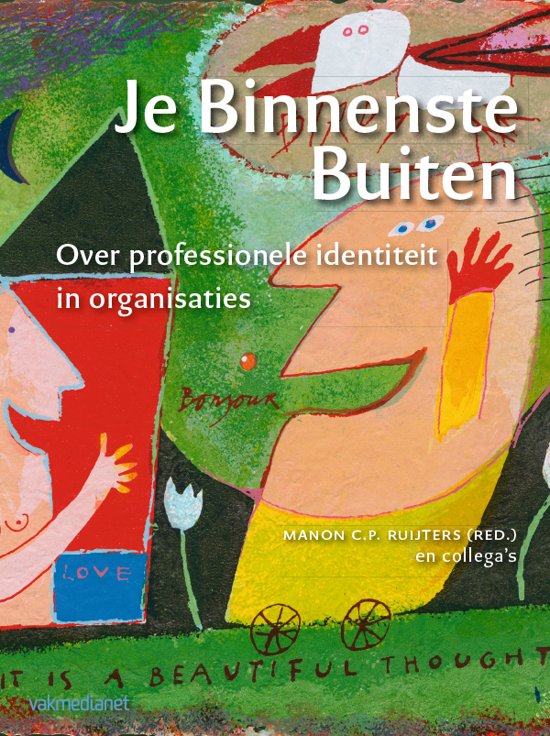
Shortly after the MOOC I bought the book 'Je Binnenste Buiten' by Manon Ruijters and colleagues. I think it's a great subject they explore with the book: professional identity. It is also a central concept in the theory of communities of practice. The book is recommended if you are also interested in developing professionals and knowmads. They argue that more attention is needed for professional identity in case of changes in a domain, career- and cooperation issues. Professional identity is not something that is fixed, but your identity is continuously developing, and therefore requires maintenance and attention. Unfortunately, the book is 'technology blind'. Surprisingly, I often read books & articles which are completely focussed on technology, or they are about other topics, and do not really address technology influences. The interface is still not fully explored. Or do I have a professional deformation?
The knowmad's identity is strong
The definition of professional in the boek is:
A professional is a person who chooses and seeks to be able to serve customers in a competent and comprehensive way, with the help of specialist knowledge and experience. In addition, he uses, and actively contributes to, a community of fellow professionals who continuously develop the subject.
I love this definition, because it clearly describes that a professional wants to develop his or her knowledge and compentencies like the knowmad, and also contributes to a community of peers. The knowmad is by definition someone with a strong identity and self-knowledge. These people prove to be more stress-resistant, to be more successful and to have more self-esteem. A strong lesson I take away from this book is that stimulating knowmads and knowmadic work in organizations means paying attention to professional identity. We do a regular exercise by making an I-cloud with topics of interest to you, but there could be more questions.
Serial masters Lynda Gratton describes the new professionals as serial masters. A serial master has deep knowledge and competences in a number of domains. So, you need to specialize yourself, and you will be in a new domain for a year, but building on your past experiences and interests. A strong and rapid development in identity. I think the identity of a knowmad meanders more and changes more rapidly than the average professional by curiosity and changing assignments. Identity questions and self-knowledge are therefore more important to stay grounded.
Technology's influence on professional identity: online identity
An important influence of technology on contributing to professional development is that professionals are increasingly online in (informal) networks: sharing about their work and thoughts in Tweets or other micro-messages. This is a new level of contribution to professional development that previously did not exist. Identity has to do with what makes you unique? In the book, working on your identity is linked to self-knowledge and influence by how others think about us. Social media forces you to work continuously on your professional identity. If you are very active online, this forces you to make choices and think.
Boundary crossing
A second change is that it is becoming easier to look around you and cross borders with other professions, become members of communities you would not normally become members of (eg, like in my case marketing communities). A knowmad not only contribute to developing his profession with fellow professionals, but also innovates by looking across the boundaries of his own domain into other communities- boundary crossing. Online it is incredibly easy to take initiatives with others with different expertise to contribute to new areas. An example? I got to know Jos Maasen and Peter Staal online and we are now writing a blog together about using community principles to design social MOOCs. In other words, there are numerous new ways to work on professional development.
Personal branding
I once wrote a blogpost about personal branding. As a consequence of the need for personal branding, the process of professional identity formation will develop in a substantially different way, and way less linear. You can already build a reputation as a young, starting professional. I think that Erikson's identity creation phases (trust, autonomy, initiative, fidelity, identity, intimacy, care, integrity) do not apply anymore. To give a practical example. The book shows the example of co-assistents who struggle with who they are. Solid feedback during their internships influences their identity. However, the online world offers a whole new space, contacting other co-assistants in an online community, possibly online valuation from unexpected angles. The new space that the online world offers is huge.
Conclusion: A great book that puts the theme of professional identity on the map, but with very little attention for the influence of technology. Huge need for a new chapter about online identity!
Imagine, you work in an organization and you are convinced of the importance of knowmads. You know this is the future, and knowmads are needed as crucial to drive innovation in a learning organization. You also know what skills are necessary as a knowmad. You already working as a knowmad yourself. But organizations need more employees who work knowmadic to be innovative. How do you stimulate a movement ... how do you create a collective of knowmads?
Typology of professionals in use of technology in relation to work
The participants of our Dutch MOOC 'Help there's a knowmad in my organization thought about this challenge with the starting question "How do you stimulate a move toward knowmadic work?" The above model from our book Learning in Times of Tweets, Apps and Like was provided as thought provoker. In this model we describe four types of professionals. They differ in the way in which they employ social technology in their work, depending on the motivation to develop the subject and affinity with social technology. The typology of professionals was recognizable to the participants. The online exchange led to the following strategies to initiate a move towards a more knowadic work and learning climate in organizations: Start with the knowmads The most logical choice seemed to be focus on knowmads. "Knowmads make your adrenaline flow" is the experience. Finding and combining knowmads can trigger an oil leakage action, with more and more people joining and working on new ways of working. This group can also develop further.You may use the Seek-Sense-Share model to work on sharpening individual practices. You may also pay attention to professional identity. If you show yourself online - what's your identity? These are, for example, questions you can discuss in a knowmad café (see the interventions at the end).
Connect knowmads and googlers Another strategy is to link knowmads to googlers. Form duo's where the knowmad shows the googler new ways of working. Working with googlers keeps the knowmads realistic and prevents them from getting too far ahead from the troops in the organization. It may earn them some recognition too (and avoids frustration). Focus on googlers and hobbyists A large number of MOOC participants intend to focus rather on googlers and hobbyists. You can appeal to Googlers by talking about their field of work. They are likely to be interested in additional possibilities of working knowmadically to keep up with their field of expertise and networking. When you show this, you awaken their curiosity. Hobbyists are already handy online but do not put it at work within the context of their function yet. There may be several reasons for this. Knowing the reason is key to change. Perhaps they have learned to participate in and adjust to the way of working within the organization? For example, let hobbyists help short-term projects to help others get the right supportive media.
Koppel googlers en hobbyisten A number of MOOC participants would specifically choose to link the googlers and hobbyists - a strong combination because they can learn a lot from each other - on an equal footing. The hobbyist learns about the subject and the googler about smart online networks and tools. Think reverse mentoring. And how about the followers? Few MOOC participants choose to focus on followers, although it is important to continue to encourage and guide this group. They may need, for example, a low-threshold helpdesk.
About the model
The 'Typology Professionals in the Use of Technology in Relationship to Work" model is intended to look at professional behavior. A bad use of the model would be to put people in the boxes. It should lead to a discussion about behaviours. Emphasize that people can change or at some level show google behavior and on another level knowmad behavior. It is important to emphasize that there is not one correct blueprint way of working, but that everyone has to develop his own unique way that suits him or her. Maybe there are offline knowmads who read paper magazines and share knowledge at meetings. "It's not all internet that is blinking". Ultimately, it is about finding an effective way of working, learning and contributing to professional development, not about online or offline. The model is especially helpful in reflecting on the right interventions to stimulate collective know-how work and to differentiate it into types of professional behavior. With a googler, you may not have to talk about blogging right away, with a hobbyist that's not a problem.
Mariëlle van Rijn wrote a nice blog geschreven using more detailled profiles and designing interventions. The Networker for instance is given the task of adding two new people to their network every month who can contribute to the organization and present this on the intranet.
Walk the talk, organize a knowmad café and share success stories
Apart from thinking about who you are going to focus on within the organization, it's equally important to think about your intervention strategy. Many MOOC participants intend to work on a shift in organizational culture. Hereby, the management style (space) and digital skills are important elements to work on. The following strategies emerged:
'Practice what you preach'. Make sure that you work as a knowmad yourself, but also show that you can deal creatively with technology: put up Padlet during a meeting or brainstorm ideas via Socrative. This will help people get used to technology as aid.
Do not focus on individuals but on groups /creating a movement. It's unpleasant if you're alone as a knowmad in an organization. A dynamic movement can attract new people and grow slowly.
Organize a workgroup around this theme. Ensure to have mix of all types of professionals represented in the working group. Or work with ambassadors. Of course, you can find plenty of ambassadors among the knowmads.
Start experimenting with this working group. Get started. Don't remaining in policy making or talking modus but ensuring good implementation. For example, a practical experience of a participant is that the toolset in his organization changed too much and technical support was scarce, which made all initiatives fail.
Harvest and share success stories. For example, organize a knowmad café to share these stories. Success stories can trigger googlers in particular. They are already interested in the subject matter and if they see successful new ways to learn and connect, they become enthusiastic.
Engage executives. If knowmadic work is part of the official strategy, this gives you space to experiment and invest.
Look closely at the context within the organization to define your strategy. Sometimes a community at the interface of various organizations is easier because it offers more space to innovate. Find a burning issue within the organization and link to it to make it important.
And last but not least - look also at knowmad behavior during the selecting process for new employees. The more knowmads, the more they can invoke a turning point.
Do you read Dutch? This blog is one of six blogposts about 'Werken als knowmad':
John Moravec was the first to coin the term knowmad in the book Knowmad society. In this Tedtalk John poses an interesting statement about the 'rise of the knowmad'. "In 2020 45% of the workforce will be knowmads". Eh 2020? That's already in 3 years time! Hurry up?
On what basis is this 45% calculated? Who are these other 55%? And what type of organization is attractive for knowmads? It was great that John Moravec himself participated in the MOOC from Minneapolis and we could just ask any questions and the next morning we read his answers.
Towards meaningful work
Previously you did your whole life the same work and preferably for the same boss. My father worked his whole life to repair and maintain army tanks and did this till he retired. Developing yourself was less important. The transformation from industrial society to the society knowmad brings along a new mindset towards work. In today's knowledge society personal knowledge is becoming more important. A knowmad not slavishly performing a job for a boss, but is looking for work that is meaningful to him / herself. Work in which you can find a personal connection. An example illustrating that the core of the knowmad lies in the connection to your own passion: "I was a knowmad a decade ago but adjusted me to what was expected of me, family, employer, society Hopefully there will be more. space for knowmads! " The famous 45% in 2020
John explains that we are talking about an estimate, not a measurement. 45% knowmads 2020 is a best guess, based on trends such as the growing number of independent workers, flexible work, intrapreneurship, etc. In the US, the estimated numer is 35-40% at present. The challenge with this figure is that it is difficult to measure, and that an OECD project would be necessary to collect all the data and compare. Some in the MOOC think that 45% is on the high side, but recognize the trends we are talking about. "I see the changes in the direction of the knowmad society: as more hybrid structures, professionals working independently and combining this with their work as part-time employee for example." The changing context of work driven by technological changes, think about robotics, drives us to work more knowmadic, we have to adapt and learn.
An important critical note: 'knowing how to find your way with knowledge' seems to become more important, but it can also create a gap between those who succeed and the rest. A new elite of knowmads? The have and havenot? Racquel Roca has written a Spanish book about knowmads which I am currently reading. She sees the middle class disappearing, A trend which Lynda Gratton also describes. The increasing possibility of working virtually makes it possible for any citizen to become a knowmad working globally. This means that the past advantageous position of Europe and North America will be lost. A positive vision for the future is "major jobs will be taken over by robots and machine learning, let's organize a basic income for all and learn will become a hobby!" ;)
By the way, the knowmad is an archetype. There is a continuum between the old and the ideal worker knowmad. Knowmads come in all shapes and sizes, but few will correspond 100% to the above-described ideal image. Is the plumber a knowmad?
Of course, the conversation was also about 55%. Are these the less educated, the butcher, the attendant at the nursing home, the cleaner? Not necessarily, the majority opinion was: blue collar work can be very knowmadic. For example, an electrician could not find the problem, made a quick photo and shared it with its online network. Within 10 minutes he received answer from a colleague and he can solve the problem. This is also knowmadic problem-solving. Online and offline knowmads
Can you be knowmad without online skills? Tiffany Motton think about 25 to 45% of the professionals might be seen as knowmadic, but lack digital skills: they could be seen as offline Knowmads. However, it would be a paradox that people with a knowmadic mindset, open and curious would overlook the wonderful online opportunities. Online information overload is a challenge for the knowmad. "At times I feel completely overwhelmed by all the sources. Am I therefore less of a knowmad?" Another challenge is the need for deep thinking and get out your information bubble. Is a knowmad in a bubble a real knowmad or it is crucial that he/she fosters diversity in his network?
Which organization welcomes the knowmad?
Perhaps we will welcome 45% knowmads in 2020 ... but I wonder how many organizations in 2020 are capable to welcome knowmads. Which organization are best knowmads? Knowmads are not all the same: some seek more authoritarian structure than others. Many are seeking space for development and self determination. A system as Holacracy works in some cases but not everywhere. Startups and smaller organizations can work knowmadic, but what about the larger, more bureaucratic organizations ?. "I work for a large company. I see that we are becoming more hybrid. The work and the process is standardized in a part of the organization and will be done by robots within a few years. Innovation is located in another part where people work in several teams with methods such as agile and scrum. That's the part which will speak to knowmads" Larger organizations (both government and businesses) want to be agile and experiment with spin-offs, working with a network ring. As one participant said: "I think that the organizations is no longer the unit we need to focus on: focus on networks" Slowly, more and more knowmads will enter 1.0 organizations. What influence will they have on these organizations? Will they affect the structure and culture? Or will knowmads leave and start to look for an organization that suits them better? The leadership in the organization must also overhauled: Knowmads want inspiring, authentic leaders, work in co-creation with them and leaders with an eye for their development. A pitfall thereby may be that as organization you may have embraced an agile way of working, but it does not mean yet that the leadership has really changed. The future is here
We conclude this topic two quotes. First a quote from Lincoln via a participant: "The best way to predict your future is to create it". We can work together on these changes. And John emphasize that it is not an abrupt revolution which will take place in three years. Waking up in 2020 as knowmads. This change is already underway. Or as William Gibson says, "the future is here, it's just unevenly distributed."
If you can read Dutch or use Google translate there are more blogs about 'Werken als knowmad' in Dutch:
I have dreamed for a long time of organizing our own MOOC. I was waiting to somebody to pay me for it, but nobody did. The challenge for in a MOOC is to facilitate a large group process online. We have just completed ourknowmad MOOCwith 637 people. This topic was knowmadic working and learning. At a peaktime, there were 203 people online simultaneously. It felt like a continuous party. It has yielded many new insights and resources. We ended the MOOC with a live meetup (see pictures). In some blogs I will share the harvest. To start with...
Doctors versus internet
In December I watched the television programme dokters versus internet. In this program laymen with a laptop have to diagnose in a competition against doctors without a laptop. It was exciting to see how laymen could still figure out occasionally through Googling what disease the patient was talking about. While the doctors were sometimes on the wrong track of questioning the patient. This obviously undermines one's belief in the knowledge of physicians. Here's a trailer for the Danish version:
I definitely work and learn very differently than before the Internet. If my printer jams, I Google to find the right answers on support forums and always succeed. The influence of the Internet is huge. But I think it's still impressive that laymen occasionally beat the doctors in diagnosing a patient. What about the long education and experiences of physicians? And how did we hence work 15 years ago without the Internet? Many participants in the MOOC remembered the CD-ROM with the Encarta encyclopedia, the documentation centres with microfiches, the subscription to a magazine, the Yellow Pages. Now you can find a lot of information online, and scientific studies are becoming easier to find. As someone illustrates: "I have a closet full of books and literature, but in practice I would rather use the Internet because you can get much faster to the core of what you are looking for." If we would interaction with somebody far away we sent faxmessages back-and forth.
The doctors trauma: experts are no longer automatically the authority
The internet changes the relationship between a patient and the physician to turn it upside down. Patients will self-Google and exchange within communities. Doctors are no longer automatically the authority which looks at the patient and his/her illness and takes decisions alone. In a positive sense, the doctor can connect to the knowledge of the patient and diagnose more in-depth. Recent research in Belgium shows that 91 percent of Belgians look up information about their ailments and aches on the internet. Four out of five discusses the results with his doctor, and that is appreciated only moderately by the doctors. Many doctors feel it as a threat that patients have knowledge and an opinion. Someone in our MOOC calls this the doctors trauma.. People are no longer looked up at them. However, patients sometimes also come with information that is not true, think of the information that vaccinations can cause autism. This general 'doctors' trauma also applies to other professions, such as trainer, coach or HRD professional. There is so much information available on the Internet: you have to be sharper on your added value. That can be scary. You will no longer automatically seen as an expert / authority, and that can affects your identity. You should focus more on developing a unique vision as professional and invest effort to obtain status and to be seen as a trustworthy source. Hairdressers versus internet
What is the impact of the internet on practical and applied professions? A MOOC participant is curious to see what would happen in the programme hairdressers versus the internet. Particularly in practical professions it is of course easy to find instructional videos. However, it still requires practice to master those skills. I would really not like going to a hairdresser (or a surgeon) who only watched some youtube videos.
Data, information or knowledge?
There were clearly different views about whether you can find knowledge online, or only information. Some people think that you can find information online, but not knowledge. Knowledge resides mainly in our heads. This is the typical view of knowledge management specialists. On the other hand, you can argue that you can currently find knowledge online. George Siemens sees in his theory of connectivism learning as a process of network formation and connection of nodes, not so much as a process going on inside the brain. Knowing where you get knowledge rather than peruse is important. Learning can also occur in non-human nodes. Knowledge is changing so fast that you need a network and need to know who knows anything, even more than you can find it.
"Know-how and know-what is being supplemented with know-where (the understanding of where to find knowledge needed)" (Siemens)
Personally, I think the line between information and knowledge has become more fluid as a result of our interactions through social media. We may share personal stories online, follow people through their blogs for years, have deep conversations online, see videos how a customer call is being done. We cannot simply label this as 'information' in my opinion. Filter and focus
There is a wealth of information and it is flowing ever-faster. According to Eric Schmidt, former CEO of Google, every two days in 2010 there was as much information created as between the origin of the earth and 2009. This will be even higher now seven years later. The MOOC discussion shows how much we use online search. This however also raises the question of how to distinguish between valuable and less valuable info. How do you do that? Crap detection is important. Or, as someone says, it makes a big difference whether you get your medical knowledge of a blog, through social media, the yoga forum or a plant guru. What is true and what is not? Not all professionals are good at crap detection. Few education institutions have made crap detection central to the program. Howard Rheingold says: “Every man should have a built-in automatic crap detector operating inside him.” In crap detection by Howard Rheingold you will find all kind of practical tools and tips like the site whois.net with information about ownership of webdomains and factchecker about the American politics.
The influence of algorithms - You are looking and we will find
And watch out! We do not only have to deal with crap detection, but also with algorithms. Algorithms make sure what is on the top of your information flows, eg in search engines or on your timeline on Facebook. Check out this explanation of algorithms (in dutch). Especially in social networks, but also in search engines algorithms determine what you finally get to see. But we know little about the algorithms that Google uses. How do we become smarter than the algorithms? Still, by building and relying on a network of fellow professionals. Twitter is for instance quite algorithm- proof because you determine who you follow and those tweets surface in chronological order.