Monday, February 20, 2012

Benchlearning: jugling with figures for deeper learning


In Ethiopia, I worked with an NGO (Non-Governmental Organization) who had funds for small organizations. Year after year there was feedback from the organizations that approval of their funding took way too long. The employees involved were claiming that it was not their fault and that they were doing everything to approve quickly. As an advisor to this organization I decided to follow a number of cases made a table with the data obtained for each step in the process. It showed exactly how long the application lasted in each step. Every individual step didn't last too long but their were so many steps. With these figures in hand, we had a common truth and fairly quickly we agreed that a number of steps in the procedure should be cut. I was actually flabbergasted that my table worked so well, especially because it was a problem which had a long history of conflicts.

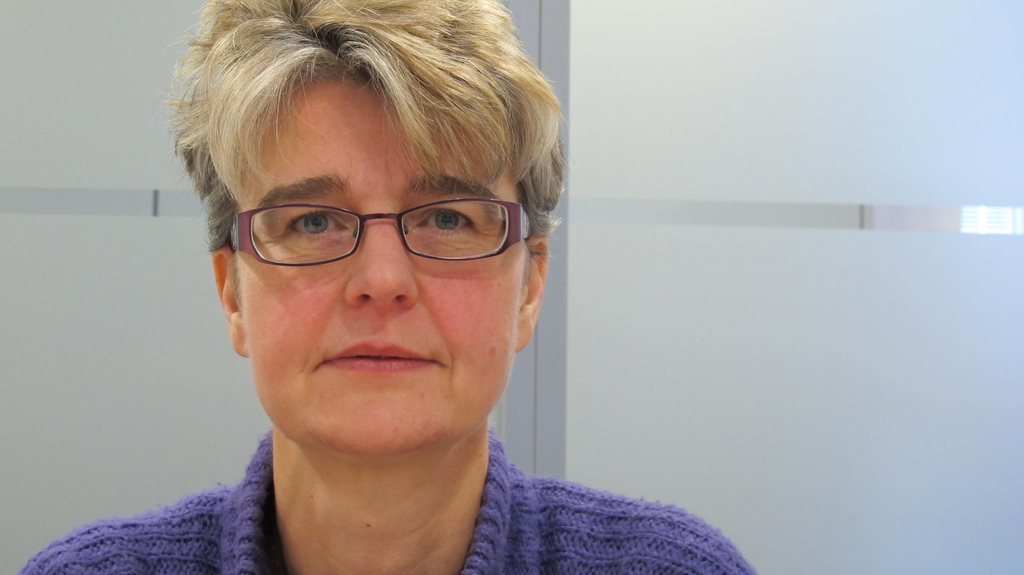
So when Nelly Spanjersberg told me about benchlearning I was very interested and curious. I think it is very innovative to learn from fact and figures, and not merely from reflection and feedback. So I was happy that she arranged an interview with Corline Koolhaas, projectleider benchmarking en benchlearning Rijk, projectleader for the Ministries. Here's the interview I had:

What is benchlearning?Benchlearning is an innovative way of learning, and therefore difficult to explain. The danger is to explain is with an 'old' vocabulary, which may not fit this new way of learning. For example: an innovation as the mp3 player is hard to explain with the words of the old ways of listening to music, there are so many new possibilities. We are working on benchlearning since 2009 and have yet to be developed a better language. But I will try anyway!  

The goal of bench learning is creating a better government without making a judgment about what is right and wrong. In the case of bench learning we want to create a new vision, rather than a strategy in place. Benchlearning helps to discover: are we moving in the right direction? The traditional way of working with statistics and benchmarking worked like looking in a mirror. In benchlearning you do not you look back, but you monitor what is happening around you, with no hypothesis, and without predetermined indicators. Having predetermined indicators restricts your vision. In benchlearning you have a look at information available and arrange in in new ways, but without a set first hypothesis. You go looking for patterns. This leads to a deeper form of learning than through indicators or other means. 

Furthermore, the collective process of meaning construction is very important. You will look at the figures together: what does this mean? This means you work to change ideas and culture, yet without talking about 'culture' or 'change'. It is extremely important that you not filter yourself but that people are going to interpret what the numbers mean. Because most people want change but do not want to be changed. They must draw their own lessons"  

How does the benchlearning proces look like? "We start by making conversation starter sheets. This is a collection of figures around a particular topic. Then we assess what figures surprise people and why. After that we organize meetings, on these subjects with a central question. It is important to not to do this in a meetings environment, but in an exploratory, different setting. People should be open and confident to share. It is important that they are not judged behind their backs on what they share. These meetings lead to new insights and meaning-making about what happens in practice".

What are situations in which benchlearning fits well? "You have do it where you have a good breeding ground, there should be a clear problem. There must be some cracks. The method lends itself to larger organizations for internal sessions, but you can also apply to benchlearning amongst companies. It does not work when you are working with highly judgmental people who do not want to explore what is going on. If people in the bargaining or negotiating modus they cannot learn. Furthermore, it is important to ensure you have participant of an equal level within the organization who can inspire each other."  

What is the function of the data, the figures in benchlearning? "
The figures provide the confrontation with the real world. Sometimes a problem is already recognized as a major problem, but the numbers make it more manageable. Figures work very well to discuss actual practices, even with people who are afraid of figures. With them you present the information just in a different way. By presenting the numbers (which are often already available!) in a different way, you get a very different conversation. Often people talk past each other. In bench learning you create common ground by the use of figures and a central question. "
 
I am definitely inspired by bench learning and still want to see if I can try part of it in my own practice. For example, it could be interesting to start a session with teachers with data on the use of social media by students and teachers? Seems interesting to see what kind of conversation that brings.

Sunday, February 05, 2012

Brain science meets social media

Brain learning is currently a hot topic in the Netherlands amongst learning professionals.  I read the book Brein@work van Ria van Dinteren en Nina Lazeron..  They interviewed various scientists and are translating new insights from brain science into practical consequences for organising effective learning situations. An example: sleep is very important for processing new information and new stimuli.

I'm working a lot with sociale media and communities of practice. Both are means to make learning processes stronger and more effective. I'm convinced you can win a lot by starting online for instance. Friday I attended a session for trainers about training methods. Very interesting to compare what methods you use. However, there was a case discussion about managers who were too direct in their communication and hence did not create a good working atmosphere in their teams. The result was a bunch of unhappy employees and a lot of gossip. The solution was a three hours training for the managers. I'd believe it is more useful to work for shorter periods and try to know what the managers think, and see it as a change process.

I'm very happy to work with Ria van Dinteren to prepare a session on Brein meets social media on the 16th of February in the Netherlands. We hope to combine insights from brain science with the way you can use social media in learning processes. It may provide a strong underpinning for certain ways of working. Many of the things I do I believe in based upon my own experiences and insights, hopefully my practices can improve by using these new discoveries about our brain.

One of the questions I often hear is: Does Google make us stupid? Dr. Paul Howard Jones is analysing the latest scientific research to investigate this question. You may watch the following youtube video. His main message is: technology is not good or bad for us, it is important HOW we use technology. The internet may solve problems and may create problems. Google can make us smarter as well as more stupid, depending on the context of use. 1,5-8,2% of the population is using the internet in problematic ways (eg. addiction). Especially action games may be addictive because they give us a dopamine boost and hence a good feeling. His explanation is quite general, however, in the last 5 minutes there is an interesting question about teachers who have to compete with games after school. Students who game may increasingly consider class boring.  The solution of Paul Howard Jones is to make the lessons more engaging, for instance by using mobile phones and other technologies. Technology is not making us stupid, but we have to make smart use of it. Here's the full video.


Ria and her team have pulled out the most important brainprinciples - important for learning. I will share the most important principles briefly (here's a Dutch article about brain learning -I'm not sure there are good English resources about the principes, let me know in a comment if you know English resources). After outlining the brainprinciples I will try to relate them to using social media in learning processes.

  • The emotional brain - we can use the power of emotion while creating learning situations and facilitating learning processes. You can use interesting stories to match information and emotions for instance. It also helps to have fun in whatever you are doing, it helps to retain information and a memory. Relating this to social media, you could say it is important to surprise people with an interesting new medium, especially at a time when routine has set in. Asking your students in class to send a summary by SMS which is shown on the screen may be exciting. And you may use digital storytelling. Blogs can be appealing because of the personal storytelling inherent to the medium for instance. On the other hand, the emotional brain principle also shows that using social media is also a potential pitfall, for instance when technology becomes a hurddle for participants, taking away attention from the important topics to technology. I once had a group experiencing a lot of technical problems with the first webinar. This was an immensely negative transforming experience for the group and there was some continuous fear for webinars.
  • The brain of connections - Brains are not static, but dynamic and changing. Continuously, new connections are formed in our brain. It is very important to connect to a known context and experience to make learning easier. For instance, link theory to work experiences and it will be easier for people to understand it and to relate to it. While using social media you can use this phenomenon by coupling the online world to the real world, by using words from the real world. I often use words like bungalow, library etc. I also talk about conversations online rather than 'typed messages'. Maybe more important is using connections to real life situations by asking people to share their daily work situations online. If you can respond to real work dilemmas, the brain will immediately link and develop new connections.
  • Het information processing brain - we can only remember a limited amount of information. Repetition makes sure we better retain important information. I still remember the french line: bon, beau, nouveau, joli, gros, haut, long, petit, jeune, vieux, mauvais, méchant, autre, vast, meilleur et grand because we had to repeat it many times in class... For good processing we need enough sleep too. Ofcourse this calls for sandwich models in which you use online and face-to-face to discuss similar topics in different ways..  
  • Nourishing our brain - Our brain needs nourishment to learn: oxigen, movement, sleep. Apart from these important physical needs the brain also needs to be nourished with a nice environment and some challenges. How can we translate this to the way we may use social media in learning processes? We can nourish the brain online in different ways as offline, with lots of links, clicks, videos, an attractive blog. It can be exciting to find interesting resources online or to create your own beautiful prezi. In one online trajectory I made sure there was a large library. I thought is was not really necessary after all, because participants were really short of time due to some work-related pressures. Surprisingly I discovered two participants had really clicked through and enjoyed looking at almost all the resources! The other participants had not, but that's the advantage online- we can feed participants differently!

Friday, January 20, 2012

Social media for trainers: think differently!

I did a workshop last Friday on the conference 'Trends voor Trainers'. The topic was: social media as learning instrument. Amazing that I don't have to translate the title of the conference for you, I'm sure you can make sense of it in English! I forgot my adaptor (really stupid of me) and felt very disorganised working on various different laptops and computers. Skype for instance looks so differently on a Windows computer. Fortunately I have my new adaptor now. The workshop was quite successful as measured by the people who contacted me afterwards for more information, to buy my book or to ask whether they could share our test Yammer and test Ning with their colleagues.

I started with a line up: from no engagement with social media to intensive engagement. Some trainers were still at zero, a few were halfway, being a member of a few Linkedin groups and maybe on Facebook. Only a few were using social media intensively and only one had followed the hashtag #tvt12 before the conference. Then we did a second line up between zero use of social media to intensive use of social media in the context of their trainings. Many trainers moved towards zero. Some had LinkedIn groep started by their participants after the training, but then would not facilitate but follow.

Here's the presentation that followed. The key is my vision that facilitators and trainers should be amphibian facilitator, comfortable moving and facilitating online as well as offline. In that way, they can choose the right mix. However, we are not there yet, as shown by the laughter when I stated that starting a Yammer group is not more difficult than using the beamer.


Tuesday, January 10, 2012

Coining the right term

I used the Tedtalk of Joris Luyendijk 'Share your learning curve' (also here on my blog) for my work with a team in higher education. They are learning about 'facilitation of value chains', networking, reading and interviewing. We had already discussed that it would be interesting for their team to start a blog (to share their learning curve- though we didn't call it like that). In the Tedtalk Joris explains that he will start to explore the financial sector starting from zero knowledge. He would like to take other interested readers along in his search via the banking blog of the Guardian. Share your learning curve is a brilliant term for this. The Tedtalk supported what we had already discussed, and gave the blog a clear focus by coining the term 'share your learning curve'. I noticed it also inspired the testing blog.

What really surprises me in a way that I actually started 'sharing my learning curve' since 2005 on this blog (it was originally called communities of practice for development). I remember we had to capture blogging in three words during a teleconference and I chose 'very public learning'. So it surprises me that you can draw attention with something which is not new, by coining a right term. Probably having a good reputation is crucial too...

The same happened with our webinar with Jane Hart. She coined it the 'flipped webinar' flipping the presentation to a blog beforehand and working with the questions of the participants. It was a great webinar by the way, and it worked very well. However, I have a background in development cooperation and since 1990 I've been busy working on participation and participatory methods. So in a way it is not very new to  me. Again coining the right term which is an attractive one and maybe easy to remember works to draw attention.

I think I'm going to try and do some coining myself in 2012 though it seems like an art in itself. I think a good term can help clients in an advisory trajectory to see something very clearly. And if my own coining is not easy, I can still borrow terms from others that have inspired me like 'the networked non-profit' by Beth Kanter, 'filter failure' from Clay Shirky and 'ambient awareness'.

Wednesday, December 21, 2011

The filtering professional

This blogpost was originally written by me for the NVO2 blog, for HRD professionals Statement: professionals should learn to digest more information and improve their filtering skills.. This is necessary to increase their general awareness of what is going on in their environment. Develop antennas for what's new in their profession, trends, customers, students (for teachers), competitors. This is part of professional2.0.  IMG_1360.JPGFirst let's talk about my bicycle (that's how my first blogpost started though you can see how my bicycle changed!). In november my accelerators broke down. First I felt like I was peddling like crazy.. But it took me a long time to make an appointment for repairs (for several reasons: bicycle repair shop had disappeared etc.). So after one month it seemed like completely normal to pedal in first gear only, I had completely gotten used to it.

Now let's make the link to organisations and professionals. Many people don't have time to explore the usefulness of social media for their work because they are already overwhelmed with email. Email has become something terrible yielding negative energy ("I still have to do my email"). They associate social media as being worse than email, even more messages, even faster flow of information. You will be even more behind!

I used to feel that you don't have to embrace social media, but I changed my thinking. Now I am convinced that as a professional you have to digest a lot of information: be able to scan, prioritise, make sense and contribute. It is part of being a creative, learning, improving, exploring professional. So they have to learn how to digest and filter information. A person I and other have frequently cited is Clay Shirky ("I study the effects of the internet on society") who said "it's not informatie overload but filter failure". In a presentation I once asked whether people also complain about too many books in the library, which made people laugh. In the library you know how to search and filter, using your favourite authors, search engine etc.

Professionals can use a 3 - step strategy to filter:
  1. Know your knowledge domains. I read a book about personal branding where they used the term icloud - a tag cloud with words of interest to you, your interest areas. This seems more logical for freelance consultant, but not for all professionals in organisations. I think you should define 3- 5 core knowledge domains (eg I have a focus on social learning, social media, communities of practice). Within organisations this is something to be discussed. Not only your tasks but also your knowledge fields should be clear. (why not include those in job descriptions?)
  2. Choose your networks- focus on the communities and networks that matter to you. I'm sure if you know your domain and find relevant networks you will not stop following them. Don't follow too many networks that are nice to know of. Focus and engage in a few. If you have the capacity to filter many more- fine.
  3. Use handy tools that help you scan rapidly and filter. Think of Twitter lists, Hootsuite or Tweetdeck to sort out information flows and set up a dashboard. RSS readers like Google reader are good to follow many feeds. I'm sure there are lots of other tools, but it helps to exchange with colleagues and take the time to test things and try something new every once in a while.
Here's a presentation in prezi in Dutch language about the 'filtering facilitator' I will use tomorrow in a training session for facilitators of a learning trajectory. 

Do you agree that professional have to filter? Or are there professions that you can perfectly perform without this new compentence? Might be! So let me know in a reaction

Friday, December 09, 2011

New media, new practice

I have to confess I read my mail on my biclycle (using my iphone). Two years ago I didn't have mobile internet yet. Twittering and mailing was place-bound to my computer. As a result I was using the first hour behind my computer to work through my mail. Now I can also read tweets and blogs. A good reason for me to read mails while travelling on the bike or in the train.

Visiting a friend I discovered reading bedstories to small children is not the same anymore. Now there are all kind of nice apps for children, with things to click on and sounds and noises. Or you can have surf for youtube videos (like   this one of the princess and the potty. Comes in handy when you need to do something for yourself.

The workfeud app has made scrabble a favorite game again.

Sylvia Witteman (a Dutch writer) wrote a column about her fixed telephone line. Everybody is calling on their mobiles, except her mother who says:  "I just like to call you without knowing who will pick up the phone". Unfortunately nobody answers, since they only answer their own mobile phones...

In gesprek met iemand die niet veel achter de computer wilde zitten stelde ik voor dat zij meer met mobiele apps zou kunnen doen. Even een snel twitter of Yammer berichtje sturen kan ook van je mobiel (met internet verbinding) en dan hoef je niet meer achter de computer te zitten. Helaas bleek ze een oud model te hebben waar je net mee kunt bellen.

Photo by Yashrg

On the photo you see the following quote: "Technology is not technology if it was invented before you were born". There is a difference in the way people embrace new technologies (or not). Developments in technology are also incredibly fast. Someone told me: "I don't have a clue how I can find my way through all the new tools, I don't understand how you do this!". The examples I shared show that new use of technology also brings new habits. And the habits sometimes inhibit adoption of new technologies. Think of sms, people have started to communicate more often or on the contrary call less. Hence it is sometimes not an improvement for all, think about the grandmother who would like to call being surprised by not knowing who answers the phone. Though this morning I read on Facebook of a granny using Skype to exchange kisses with her grandchildren. So it might also be an improvement. I wonder what determines whether you try something new? Some elements are: what your friends do (I was invited to wordfeud games and my daughters are fanatically using what'sapp while I don't). But also whether you like experimenting or whether you perceive the benefits. I have long resisted the microwave, feeling it is unnatural to radiate your food...

For organisations it is hence even more difficult to stay abreast with all new developments, like social media. Especially when the management team is slightly older or less experimental, after all management has a large influence on collective habits (culture- the way we do things around here). The way new media should be used may also be at odds with the way the organisation works. All this may lead to a situation where the organisation is missing new possibilities to network, innovate, profile themselves. One afternoon talking about social media is not enough to bring about change. In january we are starting a trajectory with a new organisation working during half a year exploring new media and how this may lead to new ways of organising within the organisation. I'm very excited and hope that we can manage to change some practices. I think 6 months is quite a short trajectory, but hope we'll get far.

Friday, December 02, 2011

Social media: 4 opportunities for secondary education

Not too long ago I went to an evening session about social media at the secondary school of my daughter. It struck me how the subject of social media is approached from fear. I was very happy when I was invited to do three sessions for the teachers of a secondary school myself. You can imagine that it was not about fear, but about the 4 opportunities that social media offer.
       
  1. Opportunity to learn in communities with other teachers - nationally and internationally

  2.    
  3. Innovation in the way classes are conducted

  4.    
  5. Adding 'mediaknowledge' (mediawijsheid) to the curriculum

  6.    
  7. Opportunity for reputation management online - make your students ambassadors!

Below you will find my presentation in Dutch.


After the presentation there was the opportunity to explore tools in a 'tooltour'; sitting in small groups or individually behind a computer. Twitter was popular, but also RSS readers like igoogle were appreciated, to follow a few interesting sites or blogs. A group explored wikis and discussed the idea to put examresults on a wiki up for questions. Now a lot of questions are received by email. Using a wiki might be a more efficient way. We found out the twitter account with the name of the school was already taken, probably by a few students (10 students were following that account).

Docenten #varendonck over innovatie in de les met sociale media on TwitpicThe last part of the afternoon was World Café- like. The 4 opportunities were placed on 4 tables with a few questions. In two rounds, teachers could chose the subject they would like to discuss. It was impressive to see the topic was very much alive and touches something, even though not all teachers are happy with social media. The presentation was still quite overwhelming.

The table about learning in teacher communities started talking about education in the future. They thought it was slightly off-topic but I think it is relevant enough: your ideas about the future of education will determine the importance you attach to social media and social learning. The group discussing how to teach students about smart uses of social media discovered that many thought this is covered in other classes, but in reality the school was rather reacting to incidents instead of having a systematic way of incorporating it in the curriculum. 

What struck me in the informal conversations with teachers is that there are huge differences in the way teachers react to these opportunities. A minority are real pioneers, read edublogs, twitter, experiment and are excited. Others (the majority) are slightly sceptic and fear that they will have to spend more time behind the computer ("I prefer to make music and run!). Practical applications to improve lessons are appealing. A few feared that using social media in class makes teachers vulnerable. What if they play games or chat with friends on Facebook rather than doing their assignments? How to prevent teachers being explosed on the web in ways they do not like? I'd say you need to offer structure and make clear agreements on what to do and what not to do.

Lastly there seemed to be a need for some guidelines for teachers how to deal with social media (do you friend teachers, do you share? do you read?). Everybody is now learning and deciding on his/her own.However, such guidelines need enough freedom for teachers to develop a strategy that fits their personality and preferences.

Monday, November 28, 2011

Webinar on serendipitous learning with Jane Hart

Last week we discussed the term 'serendipity' in our learning trajectory on social media. One participant thought this might be a country in Africa :). Serendipity doesn't seem to be a very commonly known term for learning professionals, at least not in the Netherlands. Nevertheless, it is something that deserve more attention in my opinion. Therefore we are organising on December 15th from 20-00-21.30 hours Amsterdam time a webinar with Jane Hart, international expert in social learning and writer of the 'social learning handbook'.

What is serendipitous learning and how might it this type of learning be stimulated through the use of social media? Definition from wikipedia: Serendipity is finding something unexpected and useful while searching for something else. The word was introduced in English by Horace Walpole in the 18th century, in a letter talking about a story he read: the three princes of Serendip. In that context serendipity is associated with the capability to draw conclusions from apparent coincidences. In other words: smart, prepared people are better capable of making discoveries based on coincidental circumstances.  The discovery of both penicilline and the post-it notes are known examples of discoveries by serendipity.   
Post-its are an example of serendipity (accidental discoveries): the glue from the post-its was already discovered by researcher Dr. Spence Silver, small sticky bullets. Because there is only a small proportion of the bullets in contact with the surface, this provides a layer which sticks but is easy to remove too. The intention of Dr. Silver, however, was to make a very strong glue. Hence the practical application of this glue was not immediately apparent.  The real invention was by Art Fry. The story goes that Fry was frustrated about the bookmarks that kept falling from his book. In a moment of Eureka he thought of using Silver's glue to make a solid bookmark which is easy to remove.  Source: http://nl.wikipedia.org/wiki/Post-it
A good illustration of the fact that serendipity is not about finding weird and unexpected information but is about making the connections, finding applications without the context of your own work. Social media is excellent for stimulating serendipity, not only at the level of new inventions, but also at the leven of finding creative solutions for problems in your own work.  Jane Hart has written extensively about these possibilities and calls these workers using social media:  'the smart worker'. Click on the following links if you want to know more:

In addition to working smarter I would also like to emphasize the creativity aspect. Social media offers many new connections, but the art is making the connection to your own situation and coming up with new solutions to old problems. For instance, you can stimulate serendipity by looking across various disciplines. Social media can play a large role is this. Here's an example of spaziale, space where Naomi den Besten is blogging about the connections between process and spatial design . Below you find an interesting TedTalk from Joris Luyendijk (thanks Josien!) talking about  'share your learning curve'. Share your learning proces (for instance via a blog), start from zero and be curious. By sharing it, you create new avenues for unexpected connections.


Would you like to work with the concepts of the smart worker or serendipitous learning in your organisation? Then you should definitely read Jane Hart's blogpost: 10 steps for working smarter with social media, helping you with steps to take in an organisation.
 
Are you interested in joining the webinar? Please find more information here.

Thursday, November 10, 2011

New emerging practices for trainers and facilitators

I'm currently facilitating two learning trajectories, both starting online. I'm a big fan of starting online because everybody can start at his/her own pace and there is space for everyone to express him/herself (I actually learned this practice from CPsquare). Another recent experience is that I was skyped into a training in Cambodja for a session about online advocacy. It was my second time of being skyped into a session, the first time it felt like talking to a wall, but this time I even had the feeling I had some contact with the group. I asked them questions and they answered by raising their hand. The trainer counted and summarized.  At the end they also asked questions, passing the mike of the headset, which worked pretty well. Here you see a picture. For people who like the technical details: we combined Zipcast en Skype. Zipcast allowed me to show the slides and dictate the pace. The sound of the Zipcast was not good enough so we combined it with skype.

Both experiences made me reflect on how big the shift is for trainers and facilitator who embrace social media and integrate in in their practice. I can see some emerging new practices which are not widespread yet. Online learning exists for a long time already. However,  online learning was mainly elearning as individual online modules and had nothing to do with classroom training. Elearning and classroom training were two separate 'things'. Now with the widespread use of social media, elearning2.0 as you might call it, has come under the control of facilitators/trainers. However, making use of this potential as facilitator requires a huge shift in practices. Based on my own experiences, I'd say facilitators who want to leverage the opportunities offered by social media need to adopt the following practices:   

Select and manage your own tools. With elearning- in the sense of individual online learning modules- design and implementation is done by an instructional designer and some IT-support. Working with Learning Management Systems, there is often a more technical person involved in the design and implementation of the platform which alienates the technical design from the design of the learning process. With social media, there are so many free and easy tools, which has given facilitators the control over the tools. It is easy to set up a wiki, facebook group, a Yammer community or Ning social network. Or start your own zipcast- you don't need expensive webinar software. Even when organisations offer tools which do not suit what you want, you can set up your own toolset. To do this effectively however, facilitators need to know those tools and to be able to make a good selection.

Weave online and face-to-face activities into a powerful, mutually reinforcing blend (hence design longer trajectories). I think there is already an important trend moving from one-off training events to longer learning trajectories. Online hasn't always found its right way into the blend. I've observed that people have different ideas about what's best to do online and what kind of learning activities fit best face-to-face. Some are convinced all presentations should be done online, so that you can use face-to-face for interactions. I'm not sure whether a 'this is best done online' or 'that is best done face-to-face' exists. I've experienced that it is powerful to sandwich topics. Start online (or face-to-face) and continue to deepen them in another modus. What's for sure is that the design of blended trajectories is a new field for most trainers and new practices will have to develop over time. There are lots of blended experiences but not many trainers yet who master a systematic design of blended trajectories.


Be prepared to understand and support real problems and practice dilemmas. Tailor-made.  When you start adding online activities to the mix, you will see that there is ample space and time for people to express their questions, doubts, thoughts and experiences. You will notice that you get much closer to the actual problems and workplace-based questions of the participants. This means for a facilitator or trainer, it will not be enough to have a standard tool and exercise and take your participants through the flow, but you will need to prepared to understand their issues and respond in a tailor-made way. Take the example of a teambuilding session. If it is a one day session, you do an exercise to let the team reflect on their collaboration, their styles, give feedback to eachother. But the real effect of the exercises will surface after some time when the team is back to work. Continuing online with the team creates an opportunity for real (and longer!) support to the teambuilding process, but it also demand a deeper understanding, wider skillset and motivation from the facilitator.

Be available 24/7. Continuous partial attention. This may be the reason why not many trainers have made a real shift. A training can be neatly blocked in the agenda. Working online with a group, however, you have to be flexible and devote some continuous partial attention to the proces. If you are still immersed in a full trainings schedule, it may be hard to make this shift. One of the solutions may be to work more often in small teams of facilitators.

Open your boundaries. In the classroom training setting, it is clear who is in and who is out, there is a trainer and there are trainees. The trainer is in front of the group, the trainees are not (except in some exercises). Using social media this boundary becomes more fluid, there are no longer 'walls', anybody with an internet connection can participate. Online, you may invite additional people in the role of expert, interested colleagues, supervisors, mentors, guests or inspirators. This automatically changes the fixed roles from 'trainer' and 'trainee' to a more dynamic scene with various players. Everyone can bring in  knowledge and expertise. Which brings me to the next one:

Bring expertise into your training. You have to think out of the box (and out of the country!) and think of possible expert inputs for your trajectory, which you can bring in through webinars, skype sessions or through asynchronous discussions. In the case of the Cambodja training I knew the trainer personally and she arranged for my input, she is definitely an out-of-the-box person. Many trainers act like the expert, bring in a colleague or only facilitate processes without bringing in expertise. Facilitating process is important, but offering training without expertise input does not work for the participants who value expertise inputs. Distance is no longer an excuse!

Pay attention to social learning and building social capital. And last but not least: working with social media means fostering interaction. Social media are about online interaction. This means that collaborative learning and sense-making are important. Hence it is logical that the facilitator also understands social learning processes and knows how to work with those processes. This means taking a relational approach into account. I have the impression many trainers do that already in their training sessions, but not really consciously.

Curious to know whether you recognise these practices and whether you are already applying them too?

Wednesday, November 02, 2011

About serial mastery and social media

One of my interest areas is the professionalisation process of professionals. How do you become a master, an expert, a thought leader? What are the best ways to learn individually and collectively?

Shift- the future of work is already here

An inspiring book in that context is 'The shift by Linda Gratton'- a must read book if you are interested in the future of work. She is a professor at the London Business School and describes in her book what work and the jobs of the future will look like. The reason for her research and book was the quest of her sons to find a study areas, one wants to be a journalist and the other wants to study medicine. Is that smart? Will that earn that a living in the future? But it is not only an interesting read with the future of your children in mind, but also for yourself.

The new poor

Gratton's story is not sheer positive. She describes a process of globalization in which the 'new poor' and 'talented' can live anywhere. Your birth in the Netherlands, Europe or the US will no longer be a guarantee for a good job, we must increasingly compete with other professionals from around the world (not without reason that the tigers moms in China described by Amy Chua get so much attention). And ofcourse that's already happening. Hence a focus on self-promotion and branding rather than modesty will be normal for professionals. This too is a shift that you can already see happening. If you are self-employed like me, you can still function without a blog using your old networks and offline networking skills. However, increasingly you have an advantage if you know how to brand yourself online and to find your professional voice.

From shallow generalists to serial mastery

The book also talking about the shift from shallow generalist to serial master. A serial master has a deep knowledge and competencies in several domains. So you have to specialize, and you will need and discover a new domain of relevance every few years or so. Interestingly enough, that's like reading about myself, when I started as an irrigation engineer, morphed into an organisational advisor and I'm currently a specialist in the design and facilitation of learning processes. I typically had three-year contracts. This forces you to become a sort of serial master, because after two years if you have to start thinking what you would like to do next.

The new self-directed learning = Learning

I was asked to facilitate two workshops about the 'new learning' for career counselors. Below you can find the presentation in Dutch (in a prezi).


Thursday, October 20, 2011

The dangers of social media for youth

The high school of my daughter organised a meeting about "internet and social media". As you might guess it was focused on the dangers.. "The potential hazards are discussed and the possibilities to take measures to enhance safety .." It was very funny to hear someone do the opposite of what I do: I'm trying to enthuse people about professional use of social media and Donny Gieskens of the 'stichting veilig online' (Foundation internet safety) is raising awareness about the dangers of Internet and social media .. and he did make his point! Especially with his presentation with the blonde girl on his webcam who turned out to be an old man:). There are a lot of technical possibilities to create innovative online communities, but also for people with bad intentions.

I wanted to make notes for this blog post but thought a laptop would look kind of weird. And there was no wifi so live-blogging was not even an option. Eventually I brought an iPad for notes and I was the only one. Finally I did not dare to take pictures because it is forbidden by school protocol!.

Though I pity the fact that social media are usually approached from the danger side by parents, it felt useful to have a look at side of social media to which I usually don't pay a lot of attention. I might give it a clearer space within my own work.

Some facts

First some facts and figures for 12-16 year olds in the Netherlands

  • What does a typical teenager do on the internet? Main use is YouTube (videos), MSN messenger (chat), browsing (surfing), social media (contacts and new contacts), Word (word processing) and games (gaming)
  • 87% had a bad experience through the internet.
  • 1 in 4 boys aged 12-16 engages in cybersex
  • 2 out of 10 have met someone in real life they met through the Internet (but so do I!)
  • 1 in 100 parents think their child has been involved in cyberbullying
  • However, 40 out of 100 teenagers has really engaged in cyberbullying
  • 12-16 year olds play on average 1 hour day games
  • There are already 5.9 million years played in the game World of Warcraft
  • On average, a 21 year old has gamed for 10,000 hours
The dangers

1. Information sharing

Importantly, a lot of information is shared by children, which the parents don't want to be shared, such as holiday dates (burglars are actively using the internet for information too!). The caches of search engines will all be kept for five years, what teenagers do not always realize. So when you share a picture when you are 16, this picture may still be found on the net when you apply for a job at 21. The privacy settings on social networking sites (like MySpace and Facebook) are not always set consciously to visible for friends only. Moreover Twitter has a public account by default, what teenagers may not realize. Youngsters do not always realize what their settings are and whether their information is public or visible only to friends. Also with links between network sites like Twitter and Facebook privacy settings can be overwritten. On a positive note: companies like MySpace and Facebook may sell user statistics, but not the individual information, because it is protected by the (dutch) law on personal data.

Some tips on sharing information are: Use a nickname (not your own name and not sexygirl15). This is an opinion contrary to my advice in building a professional identity however ... And ensure good privacy settings: have a look at them together.

2. Cyberbullying

Bullying can be done by acquaintances or strangers (anonymous).

Tips: Keep all threatening or bullying emails. Every Internet connection has its own IP address, and is recognizable. In a chat program you can block unwanted people, chat programs are required to provide this function. If bullying comes from a public computer, eg library, there are many cameras that have registered who have made use of this computer, so the anonymous persons are traceable.

3. Phishing

Phishing is social engineering by imitating emails individuals are trying to extort information. If you give someone your password voluntarily and they abuse is by posting on your behalf or using your credit card it is still a crime (contrary to popular belief). Your password is yours alone. This is a legal offense.

Phishing Tips: Change your password every 70 days, using 5 digits 2 3 Unicode characters. A good free virus program is AVG.com. Do not forget to log out when you leave a computer. Automatic locking may also help.

4. Gaming

Gaming is also positive for the development of language, manners and communication. Unfortunately, 3 out of 10 parents buy games for 18 + for children under 18. 6 out of 10 parents have no control over the types of games that teenagers play.

Tip: Know what they play!
Do not buy 18 + games for under 18.

5. Sexual Abuse

Especially for girls a modeling offer may be tempting, and it comes with the instruction not to consult with the parents. Also, blackmail and threats occur. He showed a convincing example of a man who posed as webcam blonde girl. So you think you are talking to a nice girl, but in fact it is someone else.

Tips: If you suspect abuse attempts: contact the site administrator. In case of concrete evidence: File a report with the police. Webcam only with people you know in real life. To check authenticity of the webcam image: ask to raise a hand. Cover the webcam with a cloth so the webcam can not film from a distance without you noticing.

Some general tips for parents:
Talk to teens about online behavior and provide parental control and agree on time limits, etc., after school, not directly behind your computer, check age limit games, talk about experiences, learning a critical attitude. Write an Internet protocol and let the teenager sign.


I'm a little double about this focus on the dangers. It is useful to me, because it is my invisible spot. On the other hand, you could have a much wider and interesting debate about social media, socially-constructed learning and learning within the curriculum..

Tuesday, October 11, 2011

Twittering = learning?

I often have conversations about the role of social media in learning processes. Sometimes people might say: 'Ok, but twitter is not learning. How can you learn from 140 characters?!

The theory about learning you embrace determine how you look at social media and its importance (or unimportance). From a behaviourism point of view, twitter might not be very relevant as a means for learning. However, from a social-constructist view you might see a twitter network building relations. In that case twitter is very important. I used a Dutch article about various learning theories: ontwikkeling van leren in organisaties by Keursten to look at what the various thought streams might think about twitter:
  • Behaviorism: learning is equivalent to influencing and changing behaviour. You do this by offering situations to practice the desired behavior. One example is a course about giving feedback. You can teach people the right way of giving feedback and create a situation to practice it. Twitter will not be seen as an important means for learning, because the change in behavior needs face-to-face to practice (although there are also research which shows that an innovative program using a webcam to practice social skills worked very well).
  • Cognitivism: learning as information processing; the mind and thought process is put at the centre of the learning process. Within cognitivism, a clear distinction between knowledge, skills and attitudes is made and sharpened. I see the cognitivist approach reflected in many conferences, where the expert notify and explain to participants what the latest findings and trends are. Twitter will be interestingly but mostly because people may link to articles, books and information. I must admit I have used this argument myself. I would now respond differently.
  • Pragmatism: learning by doing. This an approach I see clearly in the design of 23things, a course for librarians. See for instance here. People can learn 23 new Web 2.0 tools by using them, experimenting and experiencing them. Within this movement Twitter will not be so important (unless you want to learn how to use Twitter!)
  • Constructivism: learning means developing a unique world view based on all experiences acquired. Learning is a process by which a professional adds new knowledge and ideas to his or her existing body of knowledge. Independent and self-directed learning is important. Within this thought stream twitter is more interesting. Twitter provides a window on the world. And using twitter means quite some self-direction, choosing who to follow, what to tweet etc.
  • Social constructivism: learning through collaboration. This school of thought views learn as the result of interactions between individuals, learning within networks and communities is important. I am myself a supporter of this school of thought. That explains why I think being active on Twitter might be an important part of a learning process. Using twitter to build your network and maintaining relationships.
Keursten did not yet talk about connectivism. This is also an important school of thought developed by Siemens.
  • Connectivism: was developed because the previous schools of thought were not impacted by technology. These theories do not address learning that occurs outside of people (i.e. learning that is stored and manipulated by technology). They also fail to describe how learning happens within organizations. Learning is a process that occurs within chaotic environments of shifting core elements and is not entirely under the control of the individual. Learning can reside outside of ourselves. Connectivism might be summarized as 'I store my knowledge in my network'. In the case of connectivism Twitter might be a source of serendipitous learning and self-organisation.
When you are talking about using Twitter and Yammer (a single twitter tool) within your organization is therefore important to do this in the context of your learning theory. This may help surface the differences. How do you feel about learning through twitter?
Enhanced by Zemanta